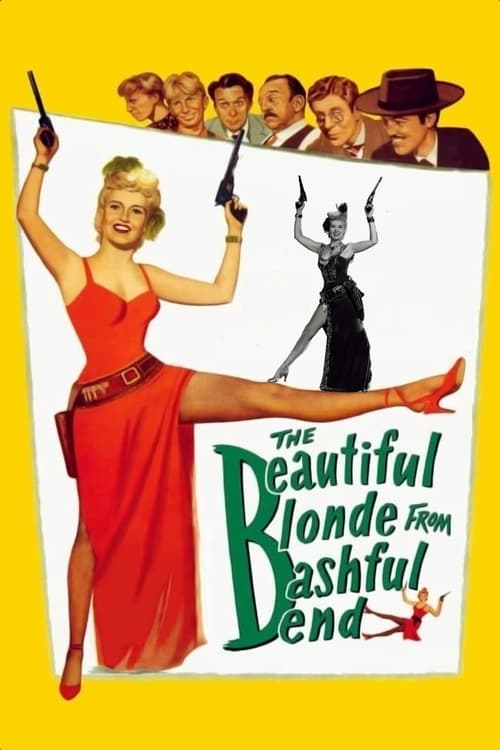
The Beautiful Blonde from Bashful Bend
1949
No user ratings available yet
Diversity score: 2.6 out of 10

1949
ApprovedDirector
Paul Landres
Runtime
65 minutes
Average Rating
No ratings yetSynopsis
A film company is shooting a western on location when the star breaks his leg. A local mule herder, who had never acted before, is "shanghaied" into taking over the role. Complications ensue.
Overall Score
Limited
Category Breakdown
LGBTQ+ Representation
The film lacks any evidence of LGBTQ+ characters or non-heteronormative narratives. It adheres to the standard romantic tropes common in 1949 Western comedies.
Gender Representation
The narrative focuses on male protagonists, including a mule herder and a film star. Women appear to occupy traditional supporting or romantic roles that reinforce period hierarchies.
Racial & Ethnic Diversity
The production reflects the era's tendency toward homogeneous casting. The plot centers on class distinctions rather than racial intersectionality or significant non-white agency.
Religious & Cultural Diversity
The story follows a traditional 'fish out of water' structure centered on a film company. It upholds established social orders and conventional morality.
Disability Representation
A broken leg serves merely as a mechanical plot device to trigger the story. The film does not offer a character-driven exploration of lived experience regarding disability.
Strengths
Areas for Improvement
AI Analysis
Grand Canyon is a conventional mid-century Western comedy that relies heavily on established genre tropes. The narrative structure prioritizes traditional social hierarchies and standard comedic setups over any meaningful cultural subversion. The film's reliance on a physical injury as a mere plot catalyst and its focus on male-centric archetypes suggest a production designed for mainstream, era-appropriate consumption. It functions as a standard genre piece rather than a tool for social critique. Ultimately, the film reinforces the status quo of 1949 cinema, offering little in the way of diverse representation or intersectional storytelling.
No reviews yet. Be the first to share your thoughts on this movie!
Use the rating form above to leave a star rating and optional review.