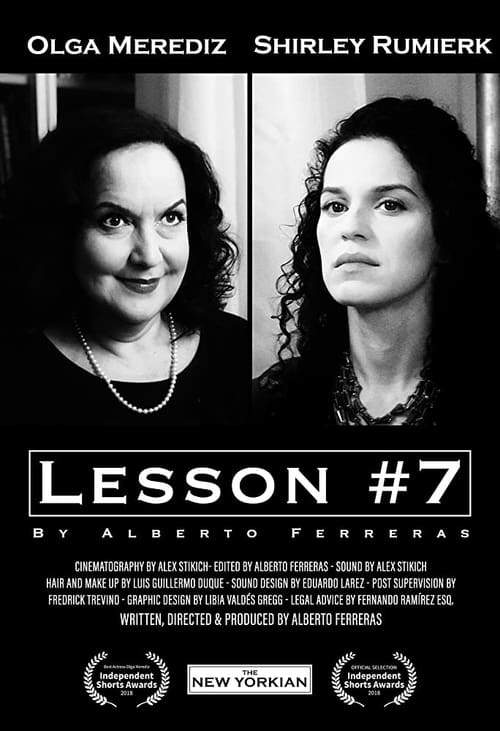
Lesson #7 by Alberto Ferreras
2019
No user ratings available yet
Representation score: 5.8 out of 10

Representation Score
Fair
2016
RDirector
Inés París
Runtime
94 minutes
Average Rating
No ratings yetNew Showbiz Analysis
The film offers a moderate level of progressive value by prioritizing psychological realism over idealized archetypes. It succeeds in challenging traditional gender hierarchies by placing women in positions of creative and intellectual authority. However, the narrative remains within a framework that assumes everyone is straight or cisgender. The lack of explicit LGBTQ+ representation or visible racial the way different parts of someone's identity overlap keeps the diversity profile centered on domestic and professional dynamics. Ultimately, the work moves away from conservative storytelling clichés. It finds its strength in exploring the messy, disturbing contradictions of human relationships rather than presenting a perfect social portrait.
Category Breakdown
The story focuses on a husband, wife, and ex-wife, without any queer romantic relationships or non-cisgender identities.
The film emphasizes female empowerment and professional success. Isabel pursues artistic validation, while Susana holds authority as a film director, challenging traditional domestic roles.
As an Argentinian production, the film adheres to a specific Latin American cinematic tradition. It lacks overt multi-layered diversity or a multi-ethnic cast.
The story deconstructs the idealized family unit by highlighting psychological contradictions. The dinner party setting underscores the instability and cynicism of domestic life.
The plot does not feature characters dealing with physical, neurodivergent, or mental health disabilities. No representation in this category is present.
Present on Screen
Limited or Absent
Official Synopsis
Isabel is torn between the need to feel valued as an actress and her insecurities and contradictions. One night, she hosts a very special dinner: her husband Ángel, who is a scriptwriter, and Susana, Ángel's ex-wife and film director, want to convince Argentinian actor Diego Peretti to star in a movie. But at some point something unexpected happens that surprises everyone and disturbs the evening.
2019

2015

2018

1991

2007

2015

2018

2020
No reviews yet. Be the first to share your thoughts on this movie!
Use the rating form above to leave a star rating and optional review.