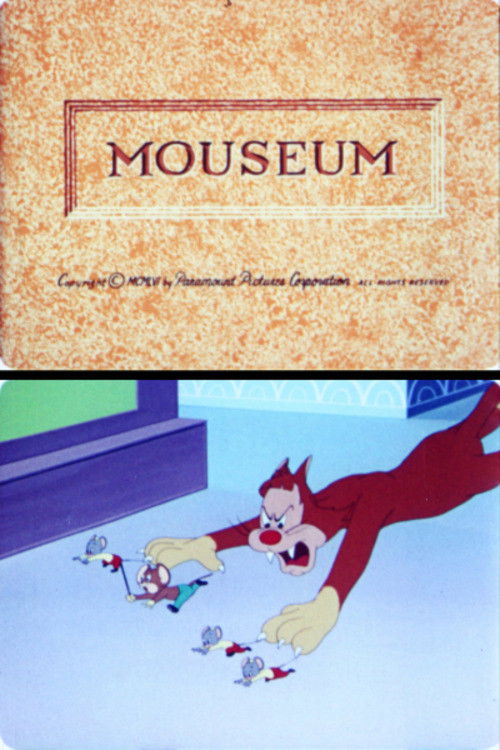
Mouseum
1956
No user ratings available yet
Representation score: 4.2 out of 10
No Poster Available
Representation Score
Minimal
1949
ApprovedDirector
Bill Tytla
Runtime
7 minutes
Average Rating
No ratings yetNew Showbiz Analysis
Campus Capers is a mid-century animated short that centers on a localized conflict between anthropomorphic mice and cats. The narrative follows a standard slapstick structure focused on personal retribution within an academic setting. The film adheres strictly to the conventional storytelling formulas of 1949, lacking the multi-layered complexity that would address progressive social commentary or the subversion of established hierarchies. Because the characters are defined by species rather than human identity, the film avoids most modern metrics of social diversity. It functions as a traditional comedic piece without intentional social or cultural deconstruction.
Category Breakdown
There are no characters or storylines that explore LGBTQ+ identities or challenge the assumption that everyone is straight or cisgender.
The story focuses solely on a rivalry between two male characters, Herman and Knucklehead. There are no female characters or subversions of gender hierarchies in the narrative.
The characters are anthropomorphic mice and cats, not humans representing different ethnicities. There is no indication that the academic rivalry serves as a proxy for racial dynamics.
The plot centers on academic social hierarchies and institutional frameworks like colleges. It reinforces traditional social structures without offering a cultural critique.
The summary does not mention any characters with visible or invisible disabilities. There is no representation of neurodivergent individuals.
Present on Screen
Limited or Absent
Official Synopsis
Herman gets back at Knucklehead from cat college Quinston for crashing the Harbard (the mice's college) Alumni Dinner.
1956
1935
1945
1954

1948

1945
1952
1945
No reviews yet. Be the first to share your thoughts on this movie!
Use the rating form above to leave a star rating and optional review.