
My Grandfather's People
2011
No user ratings available yet
Representation score: 1.3 out of 10
Representation Score
Limited
1999
Director
Sinan Çetin
Runtime
120 minutes
Average Rating
No ratings yetNew Showbiz Analysis
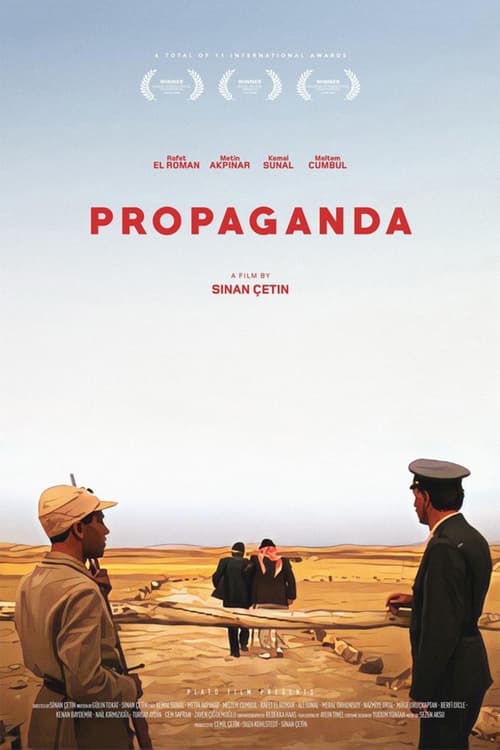
Propaganda is a sophisticated socio-political critique that uses a historical setting to examine how rigid ideologies can dismantle social cohesion. Its strength lies in its deconstruction of religious authority and its nuanced look at how identity is weaponized by external forces. However, the film relies on conventional gender dynamics. While it challenges systemic religious power, it reinforces traditional roles by centering men as the primary agents of conflict and relegating women to the domestic landscape. Ultimately, the film succeeds as a progressive critique of institutional power, even if it lacks representation for LGBTQ+ identities or individuals with disabilities.
Category Breakdown
The film does not include any LGBTQ+ characters or explore non-straight identities. The storyline centers on geopolitical and religious tensions.
Men are the main drivers of ideological conflicts and radicalization. Women are primarily portrayed in the domestic sphere, reacting emotionally to the consequences of male-led violence.
The story examines the tension between religious sects and cultural divisions due to new borders. It avoids a monolithic view of national identity by highlighting linguistic and cultural differences.
The film provides a critical view of religious authority and extremism. It portrays dogma as a tool for systemic manipulation and social division rather than spiritual pursuit.
There is no focus on physical or neurodivergent disabilities within the narrative.
Present on Screen
Limited or Absent
Official Synopsis
Based on a true story set in 1948, customs officer Mehti is faced with the duty of formally setting up the border between Turkey and Syria, dividing his hometown. He is unaware of the pain that will eminently unfold, as families, languages, cultures and lovers are both ripped apart and clash head on in a village once united.
2011
1982
2001

2004
1997
2010
2004

2008
No reviews yet. Be the first to share your thoughts on this movie!
Use the rating form above to leave a star rating and optional review.