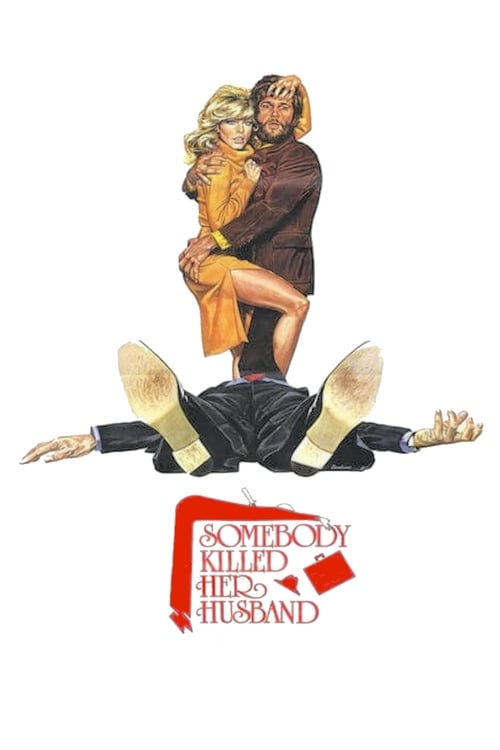
Somebody Killed Her Husband
1978
No user ratings available yet
Representation score: 3.2 out of 10

Representation Score
Minimal
1992
Director
Giancarlo Soldi
Runtime
100 minutes
Average Rating
No ratings yetNew Showbiz Analysis
Nero focuses on a character study of incompetence, using black comedy to challenge the stereotype of the decisive male hero. By centering on a protagonist defined by social anxiety and fear, the film avoids traditional masculine power fantasies. However, the film lacks demographic breadth. The narrative focus remains tightly centered on the protagonist's psychological journey, leaving little room for diverse representation beyond the central romantic pairing. Ultimately, the film's progressive value lies in its subversion of gendered expectations of strength, while remaining largely silent on broader systemic or cultural representation.
Category Breakdown
The film features a typical romantic relationship between Frederico and Francesca. There is no indication of LGBTQ+ identities or same-sex relationships.
The story challenges the stereotype of a competent male hero by presenting a protagonist defined by fear and social anxiety. However, Francesca mainly serves as a plot catalyst rather than a fully developed character.
There is no information available about the racial or ethnic makeup of the cast, so the film's ethnic diversity cannot be assessed.
The narrative explores moral relativism and the fragility of social order through black comedy. It uses a cynical perspective to critique traditional institutions and social stability.
There is no documented evidence of neurodivergence or physical disabilities being central to the character arcs or as sources of control over the story.
Present on Screen
Limited or Absent
Official Synopsis
Right after she moves in with him, Frederico's new girlfriend Francesca sends him back to her former boyfriend's apartment to fetch her something she forgot - but he's surprised to find him lying there - dead. Assuming that Francesca killed him and sent him for cleaning up, he cuts him up in pieces, puts him in a suitcase and tries to get rid of it... but he has a hard time finding a suitably quiet place. Unfortunately there's a witness, who comes back on him. One thing leads to another, and the normally shy and overly fearful Frederico has to rid himself of more and more corpses until this black comedy ends.
1978
1994
2000
1998

1999

1990

2018
1964
No reviews yet. Be the first to share your thoughts on this movie!
Use the rating form above to leave a star rating and optional review.