
Stuck with a Perfect Woman
2016
No user ratings available yet
Representation score: 4.1 out of 10
Representation Score
Fair
2024
Director
Maciej Migas
Runtime
100 minutes
Average Rating
No ratings yetNew Showbiz Analysis
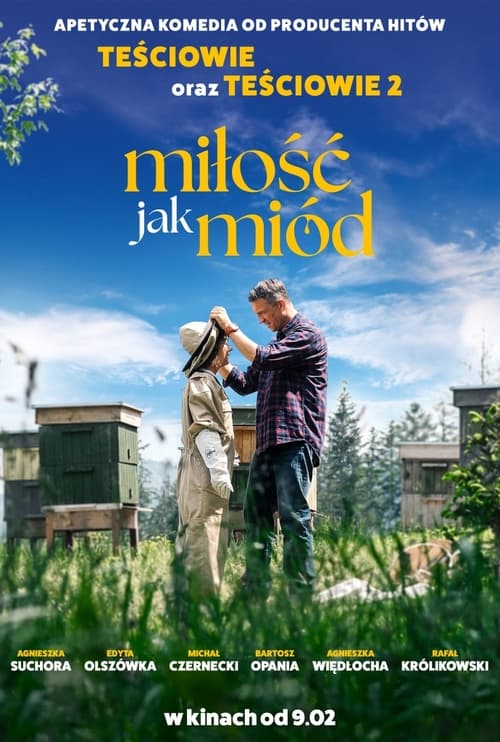
Love Like Honey excels as a character study that challenges ageist clichés and traditional gender roles. It focuses on women navigating late-life transitions, emphasizing individual ability to act and self-discovery. However, the film lacks significant racial or LGBTQ+ diversity. Its cultural homogeneity and lack of explicit LGBTQ+ representation limit its overall inclusivity. Ultimately, the film's strength lies in its deconstruction of the matriarch archetype, favoring individual paths over rigid social or familial structures.
Category Breakdown
The film touches on non-traditional relationships through a character named Agata, whose partner leaves her for a younger woman. While it doesn't center on LGBTQ+ identities, it examines changing social dynamics.
The story highlights strong roles for women in their fifties, a demographic often sidelined. By focusing on menopause and personal freedom, it challenges traditional hierarchies that prioritize youth.
The narrative seems centered on a culturally specific Polish context. There is no indication of a multi-ethnic cast, maintaining a homogeneous demographic typical of the regional setting.
The film explores the tension between traditional family devotion and individual spiritual growth. It emphasizes personal freedom and non-traditional lifestyles over preserving conventional family structures.
There are no visible or mentioned depictions of physical or neurodivergent disabilities within the narrative.
Present on Screen
Limited or Absent
Official Synopsis
Majka and Agata have as much in common as they divide. They are both over fifty, going through menopause and do not believe that anything in their lives will change for the better. One lives on the Baltic Sea, the other in the Tatra Mountains. One runs a confectionery shop, the other is a successful interior designer. One is a widow, the other is just left by her partner for a younger woman. One devotes herself to her children and grandchildren, completely forgetting about herself, the other has no family and cares about her spiritual development. One day, the friends meet at the funeral of a high school friend. Agata encourages Majka to spontaneously go to the mountains, and she takes her place. The unexpected role reversal brings a number of complications, funny twists and challenges that the women will have to face.
2016

2000

2025

2015
2021

2013

2018

2016
No reviews yet. Be the first to share your thoughts on this movie!
Use the rating form above to leave a star rating and optional review.