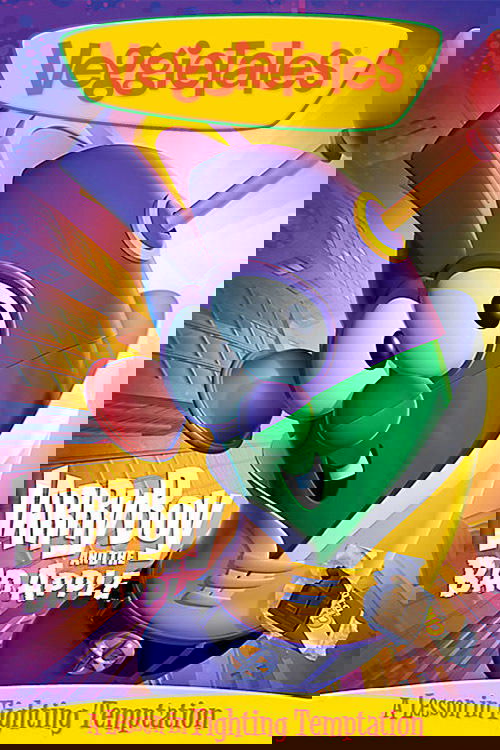
VeggieTales: LarryBoy and the Bad Apple
2006
No user ratings available yet
Diversity score: 1.6 out of 10
2007
Not RatedDirector
Brian K. Roberts
Runtime
47 minutes
Average Rating
No ratings yetSynopsis
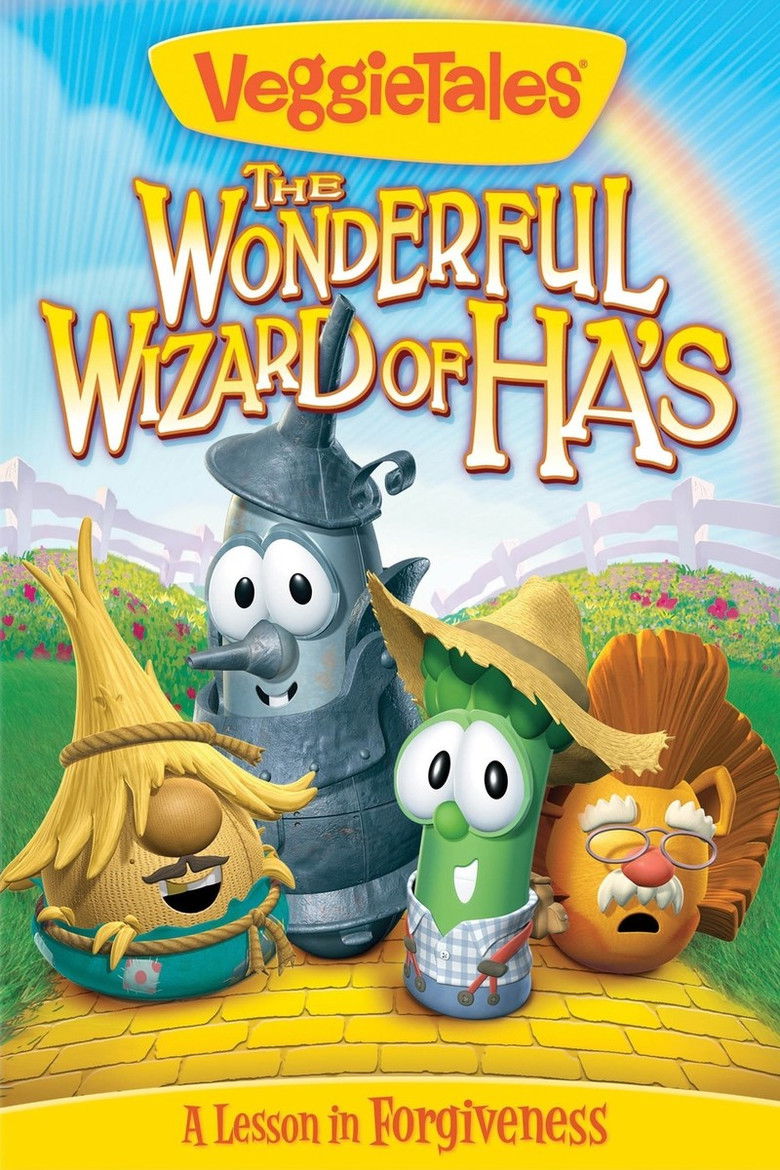
Meet Darby (Junior Asparagus), the son of a Kansas floss farmer who, more than anything else in the world, just wants to have fun. When he learns about the Wonderful Land Of Ha's - an amusement park with all the fixin's - and its mysterious Wizard who promises to make his dreams come true, Darby is determined to go. But when his father tells him he's needed to help with the harvest, Darby decides that nothing is going to stop him and he makes a choice that will change his life forever. With his pet dog Tutu by his side, Darby flees the farm and sets off to find the Wonderful Land Of Ha's. Along the way he meets a bored scarecrow (Mr. Lunt), a tin man (Larry the Cucumber) who wants to ride roller coasters and a lion (Pa Grape) that craves cotton candy. Each with their own dreams, they set off to see the Wizard.
Overall Score
Minimal
Category Breakdown
LGBTQ+ Representation
The film lacks any depiction of non-cisnormative gender identities or same-sex intimacy. Character dynamics focus on platonic companionship and traditional archetypes.
Gender Representation
The cast is predominantly male-coded, featuring characters like Junior Asparagus and Larry the Cucumber. The narrative maintains stable, traditional dynamics without subverting gender hierarchies.
Racial & Ethnic Diversity
An anthropomorphic cast removes traditional human racial markers from the visual landscape. This creates a homogeneous fantasy space that lacks meaningful intersectional representation.
Religious & Cultural Diversity
The story is rooted in traditionalist moral frameworks, emphasizing individual responsibility and obedience to authority. It promotes a singular moral code rather than exploring systemic critiques.
Disability Representation
There is no prominent depiction of visible or invisible disabilities. Mechanical attributes, such as the Tin Man's, serve as genre parodies rather than nuanced explorations of disability.
Strengths
Areas for Improvement
AI Analysis
The film operates as a traditionalist moral fable, prioritizing established social and ethical hierarchies. Its reliance on a non-human, anthropomorphic cast creates a vacuum where ethnic and racial complexities are absent. Narratively, the story reinforces conventional values like obedience and communal duty. It avoids progressive subversion, opting instead for a stable, conservative approach to storytelling that aligns with standard family-oriented media. While the characters avoid mockery, the film lacks depth regarding identity-based experiences. It functions primarily as a parody of classic archetypes within a highly specific, moralistic framework.
No reviews yet. Be the first to share your thoughts on this movie!
Use the rating form above to leave a star rating and optional review.

