
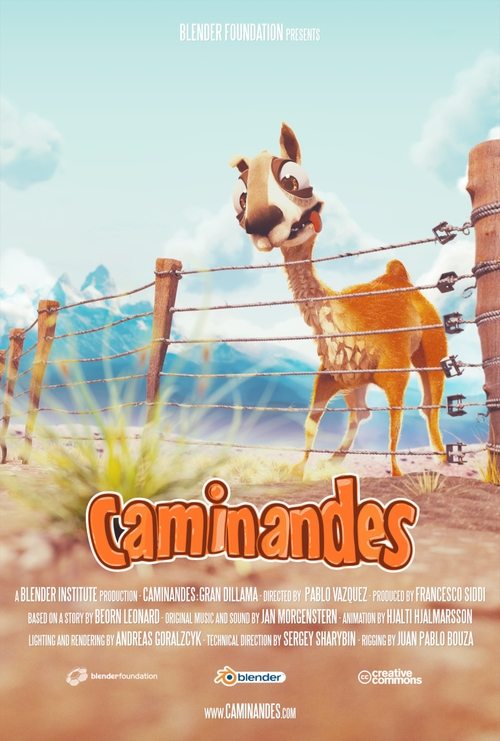
Caminandes: Llama Drama
2013
No user ratings available yet
Representation score: 1.6 out of 10
Representation Score
Minimal
2013
Director
Pablo Vazquez
Runtime
3 minutes
Average Rating
No ratings yetNew Showbiz Analysis
Caminandes: Gran Dillama is a simple, humorous story that focuses on a universal character arc rather than social critique. The film uses an anthropomorphic llama to explore the concept of perceived scarcity through the protagonist, Koro. By using an animal as the main character, the film avoids many traditional human social hierarchies and stereotypes. However, this same stylistic choice limits the film's engagement with complex multi-layered identities or specific cultural nuances. Overall, the work stays within the boundaries of conventional, character-driven animation. It serves as a straightforward psychological study rather than a platform for diverse representation or systemic commentary.
Category Breakdown
The film does not include any characters with same-sex relationships or those who identify outside the cisgender norm. The story centers around a single character's personal journey.
Using an anthropomorphic llama as the main character allows the story to avoid traditional human gender roles. This approach sidesteps reinforcing typical masculine or feminine stereotypes.
Since the main character is an animal, traditional ideas of racial or ethnic diversity do not apply. There are no racialized themes in the story.
The story explores a universal psychological theme without referencing specific religions or Western institutions. It operates as a secular fable.
The film does not depict any neurodivergence or physical disabilities within the character's storyline. Mental health conditions are not addressed.
Present on Screen
Limited or Absent
Official Synopsis
A young llama named Koro discovers that the grass is always greener on the other side (of the fence).
2013
2009
2016

2002

2015

2017

2021
2026
No reviews yet. Be the first to share your thoughts on this movie!
Use the rating form above to leave a star rating and optional review.