
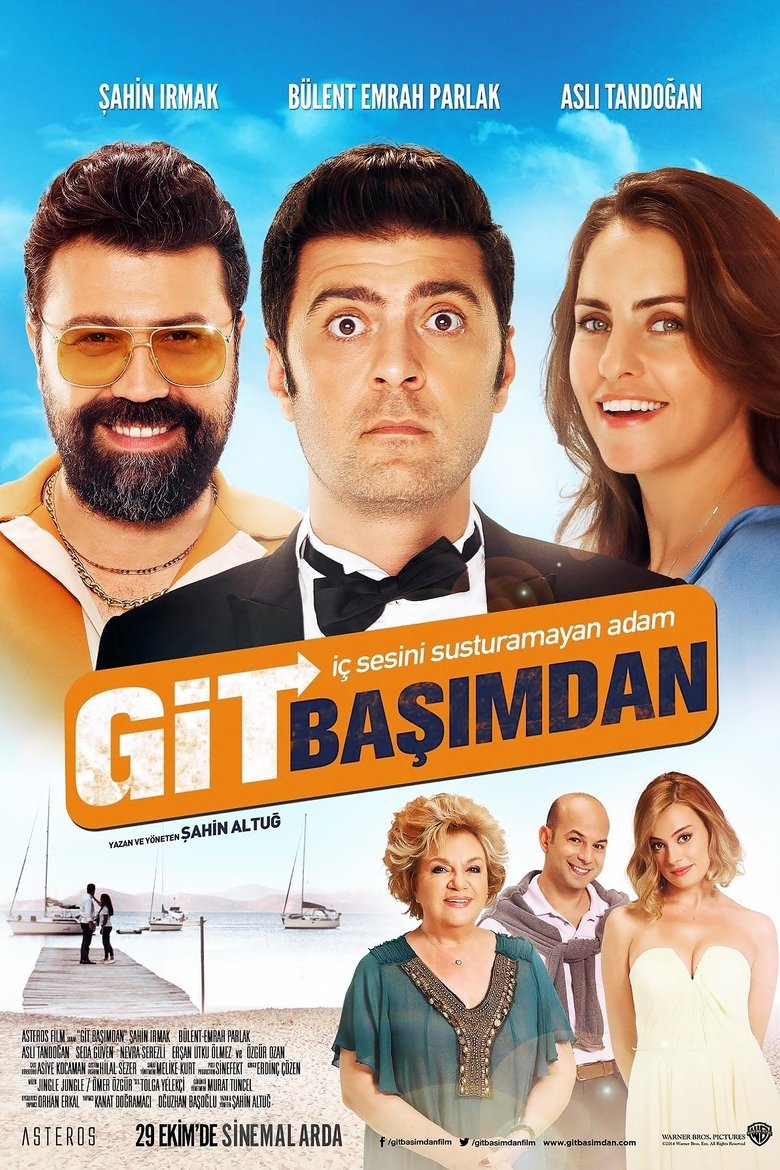
The Big Bad Wolf
2013
No user ratings available yet
Diversity score: 4.7 out of 10
2015
Director
Şahin Altuğ
Runtime
90 minutes
Average Rating
No ratings yetSynopsis
Latif Selamsiz is an ordinary man who is in his later 30s. He's dating the same girl, working in the same job ever since he could remember and also he's still living with his mother. One day he decide to brake up with his girlfiend Reyhan. But instead, he found himself proposing to her. When the wedding day arrives, his inner voice speaks and everything changes forever. While Latif is running off from his own wedding, he hit a man with his car and he joins Latif on his journey. This man is Mansur, Latif's inner voice. Latif and Mansur get involved in a fight on their way, and they met Selin during the incident. Selin's car is stolen and her turtle is in the trunk of her car. If she couldn't find her car on time, the turtle will be dead. Latif starts his journey by running off all by himself but as he moves along, he will find his true self, face his inner voice and achieve true happiness with Selin and Mansur on his side.
Overall Score
Fair
Category Breakdown
LGBTQ+ Representation
The film focuses on the protagonist's internal self-actualization rather than queer identities. There is no explicit evidence of non-heteronormative romantic pairings or queer character arcs within the narrative.
Gender Representation
Latif disrupts traditional patriarchal roles by failing to meet standard milestones like marriage and career stability. Selin participates in the journey, though her initial agency is tied to a specific crisis.
Racial & Ethnic Diversity
The story appears to be a localized, character-centric comedy. It lacks evidence of a multi-ethnic cast or the intentional blending of diverse racial identities within its social framework.
Religious & Cultural Diversity
The narrative critiques traditional social structures by portraying a protagonist who rejects marriage and social conformity. It prioritizes subjective truth and personal happiness over familial or religious obligations.
Disability Representation
No explicit neurodivergence or physical disability is central to the plot. However, the externalization of the inner voice as a separate person serves as a metaphor for psychological fragmentation.
Strengths
Areas for Improvement
AI Analysis
Buzz Off explores identity through psychological individualism rather than demographic intersectionality. It succeeds in challenging the stability of traditional social roles by prioritizing the protagonist's internal reality over societal expectations. The film's strength lies in its subversion of conventional life trajectories. By deconstructing the trope of the stable male leader, it offers a unique look at personal rebellion against social duty. However, the film lacks overt representation of diverse racial, ethnic, or queer identities. The focus remains narrow, centering on a specific psychological journey rather than a broad spectrum of human experiences.
2013

2015

2020
2019
2023

2014

2017

2022

2016

2009

2011

2021
No reviews yet. Be the first to share your thoughts on this movie!
Use the rating form above to leave a star rating and optional review.