
The Chameleon
2010
No user ratings available yet
Representation score: 5.3 out of 10
Representation Score
Good
2005
Director
Danny Lerner
Runtime
90 minutes
Average Rating
No ratings yetNew Showbiz Analysis
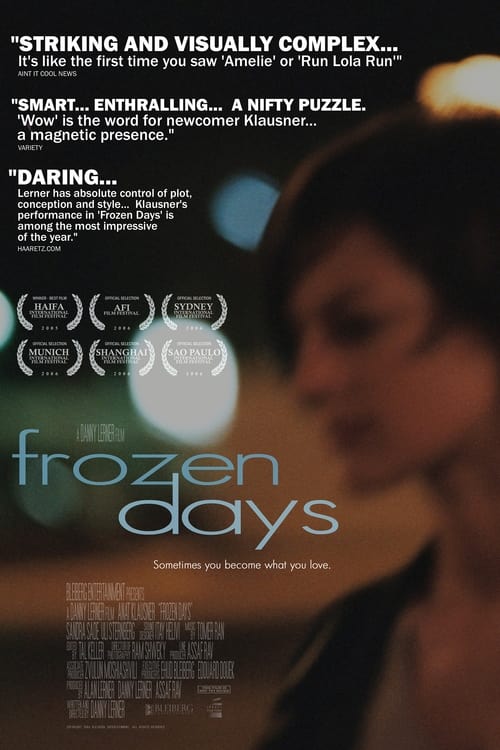
Frozen Days is a psychological character study that prioritizes the deconstruction of the self over broad demographic representation. It succeeds in challenging the permanence of gender and identity through its central protagonist's descent into delusion. While the film offers a sophisticated look at identity performance, it remains narrow in scope. The narrative is deeply individualistic, focusing on a singular psychological arc rather than a diverse social tapestry. Ultimately, the film's strength lies in its postmodern approach to trauma and social stability, even if it lacks significant racial or multi-layered breadth.
Category Breakdown
The film explores identity fluidity through Meow's assumption of Alex's persona. While there is no explicit queer romance, the performance of a different identity disrupts the assumption that everyone's gender matches their birth assignment.
A female protagonist disrupts traditional hierarchies by occupying a male-coded space. Her transition into a man's identity suggests that gender is a performative construct rather than a biological constant.
Set in Tel Aviv, the film reflects a specific Mediterranean context. However, the focus remains intensely individualistic, lacking evidence of a multi-ethnic cast or diverse representation.
The narrative prioritizes a secular, psychological exploration of trauma over religious frameworks. It focuses on the fractured reality of a survivor rather than communal or patriotic recovery.
The plot centers on neurological and psychological states, specifically Alex's coma and Meow's mental dissolution. These altered states drive the mystery and psychological tension.
Present on Screen
Limited or Absent
Official Synopsis
Meow is a young woman roaming the streets and nightclubs of Tel Aviv. She lives in empty apartments and surfs the internet chat rooms. She decides to meet Alex, her chat buddy. They plan to meet in a nightclub but a suicide bombing prevents their meeting. She survives the attack and after she finds Alex in the hospital, in a coma, she moves into his empty apartment. Gradually, the tenants start referring to her as Alex, and as she assumes his identity, she finds herself sinking into a dangerous and deluded reality.
2010

2005

2000

2005

2011
2002

2005

2007
No reviews yet. Be the first to share your thoughts on this movie!
Use the rating form above to leave a star rating and optional review.