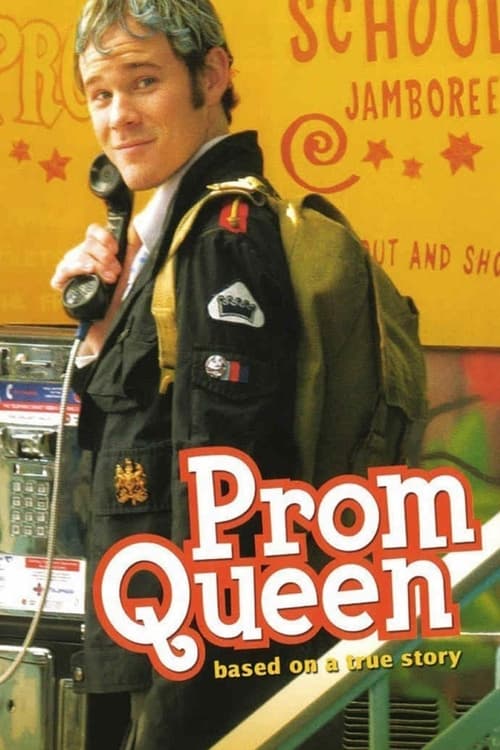
Prom Queen: The Marc Hall Story
2004
No user ratings available yet
Representation score: 6.3 out of 10
Representation Score
Good
2005
Not RatedDirector
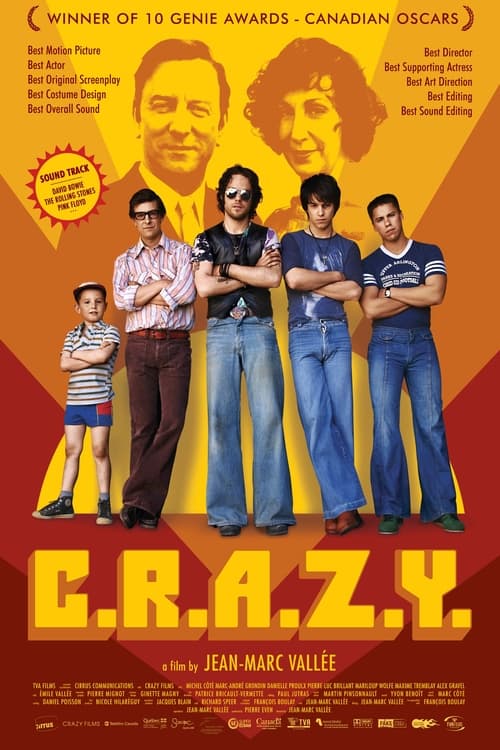
Jean-Marc Vallée
Runtime
126 minutes
Average Rating
No ratings yetNew Showbiz Analysis
C.R.A.Z.Y. is a sophisticated exploration of identity that succeeds by centering queer experiences and deconstructing traditional masculinity. By framing the struggle for authenticity against a backdrop of 1960s and 70s conservatism, the film offers a deep psychological study. The film's strength lies in its ability to challenge conventional standards and hierarchies. It creates a compelling, character-driven narrative through the friction between individual liberation and institutional authority. However, the film's scope is limited by its historical and regional specificity. The focus on a homogeneous French Canadian social circle results in a lack of diverse representation, which prevents the diversity score from reaching its highest potential.
Category Breakdown
The film follows Christian's journey to accept his queer identity within a restrictive environment. It presents same-sex attraction with emotional depth rather than as a joke.
The narrative challenges traditional masculinity by contrasting rigid patriarchal norms with more flexible identities. It depicts the struggle for stoicism as a source of psychological tension.
Set in a specific era of Quebec, the film focuses on a homogeneous French Canadian society. It reflects regional demographics without actively challenging racial norms or seeking characters who reflect more than one aspect of diversity.
The story critiques the nuclear family and rigid religious morals of the mid-20th century. It prioritizes individual subjective truth over established community codes and institutional authority.
There are no prominent depictions of physical or neurodivergent disabilities that serve as central plot drivers or character arcs.
Present on Screen
Limited or Absent
Official Synopsis
A young French Canadian, one of five boys in a conservative family in the 1960s and 1970s, struggles to reconcile his emerging identity with his father's values.
2004
2014

1994

2009

2012

2011

2008
1999
No reviews yet. Be the first to share your thoughts on this movie!
Use the rating form above to leave a star rating and optional review.