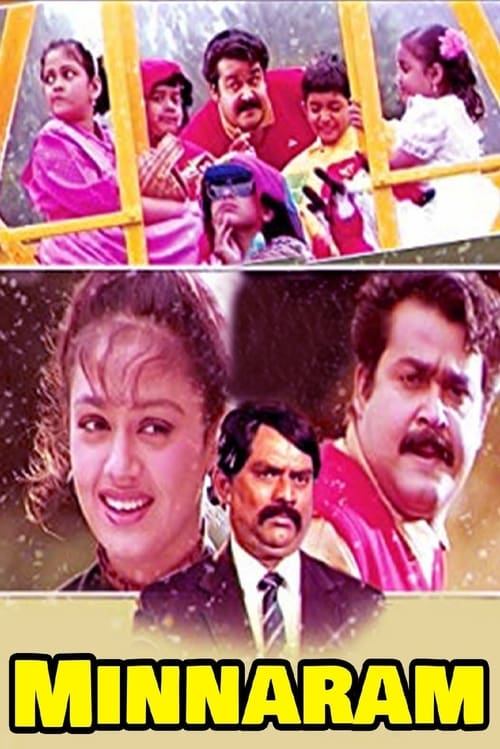
Minnaram
1994
No user ratings available yet
Diversity score: 2.6 out of 10

1986
Director
Priyadarshan
Runtime
130 minutes
Average Rating
No ratings yetSynopsis
When Venugopal, a medical representative gives a girl who runs into his cab a ride; he unknowingly gets involved in a murder.
Overall Score
Limited
Category Breakdown
LGBTQ+ Representation
The film follows traditional romantic genre structures. There is no evidence of queer narratives or non-heteronormative identities present in the story.
Gender Representation
The narrative centers on a male protagonist driving the plot's conflict. While a female lead acts as a catalyst, the structural framework maintains a traditional gender hierarchy.
Racial & Ethnic Diversity
The cast is ethnically homogeneous, reflecting the localized nature of 1980s regional Indian cinema. It does not actively promote diverse ethnic intersections.
Religious & Cultural Diversity
The story prioritizes standard romantic-thriller tropes over systemic critique. It focuses on individual agency and situational crisis rather than deconstructing religion or capitalism.
Disability Representation
There is no information regarding the inclusion of characters with physical or neurodivergent disabilities.
Strengths
Areas for Improvement
AI Analysis
Priyadarshan’s 1986 film operates as a conventional romantic thriller that adheres to the social and narrative structures of its era. The plot focuses on a male protagonist's involvement in a murder mystery, which reinforces traditional gender hierarchies. The production lacks intentionality regarding intersectional representation. It functions as a standard genre piece, prioritizing situational tension and romantic tropes over the subversion of social norms or the inclusion of diverse identities. While the film is a product of its specific regional context, it does not offer significant representation for LGBTQ+ individuals, diverse ethnic groups, or characters with disabilities.
1994
1997
1985
2003
1999
1998
2004
2003
1977
1988
2001
2008
No reviews yet. Be the first to share your thoughts on this movie!
Use the rating form above to leave a star rating and optional review.