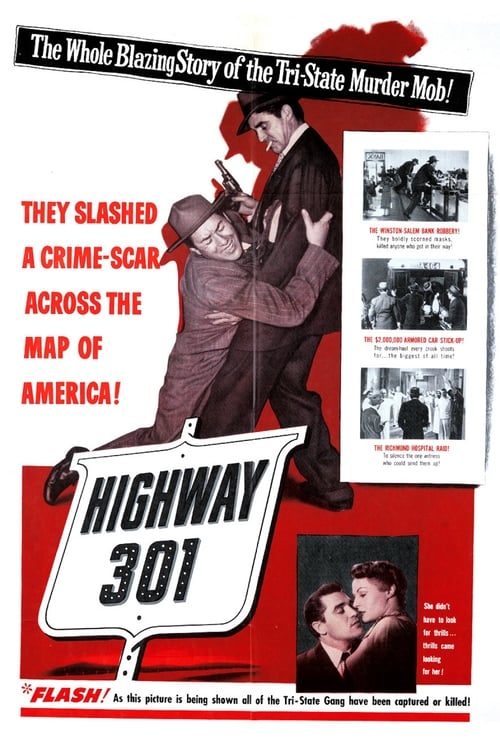
Highway 301
1950
No user ratings available yet
Diversity score: 2.5 out of 10

1952
NRDirector
Andrew L. Stone
Runtime
85 minutes
Average Rating
No ratings yetSynopsis
Joseph Cotten plays an assistant bank manager who steals $1,000,000 from the safe late on a Friday and then plans to flee to Brazil over the weekend.
Overall Score
Limited
Category Breakdown
LGBTQ+ Representation
The film lacks LGBTQ+ characters or narratives. It operates within the restrictive social codes of 1952, offering no critique of heteronormativity.
Gender Representation
The story centers on a male protagonist navigating a professional crisis. It emphasizes male agency and traditional professional hierarchies without subverting gender roles.
Racial & Ethnic Diversity
The setting reflects the homogeneous social structures of mid-century America. While the plot involves a move to Brazil, it lacks evidence of racial agency.
Religious & Cultural Diversity
The narrative follows traditional crime-thriller tropes focused on individual morality. It does not critique Western capitalism or promote secularism as empowerment.
Disability Representation
There is no evidence of characters with visible or invisible disabilities playing a role in the narrative.
Strengths
Areas for Improvement
AI Analysis
The Steel Trap is a mid-century crime thriller that prioritizes procedural tension and individual morality over social commentary. Its structure adheres to the formalist conventions of 1952, focusing on a single man's desperate attempt to flee after a bank heist. Because the film functions as a character-driven suspense piece, it lacks the intersectional complexity needed to challenge systemic norms. The narrative remains rooted in the homogeneous social and professional hierarchies typical of its era.
No reviews yet. Be the first to share your thoughts on this movie!
Use the rating form above to leave a star rating and optional review.