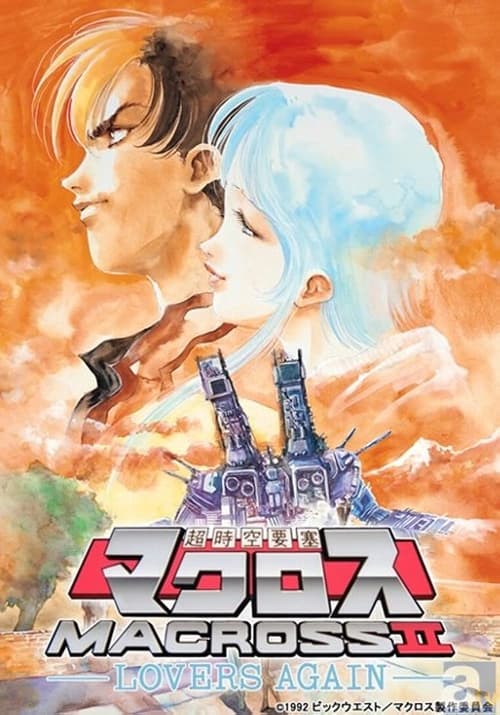
Macross II: Lovers Again
1992
No user ratings available yet
Representation score: 6.5 out of 10

Representation Score
Good
1995
TV-PGDirector
Masami Shimoda, Tetsuro Amino
Runtime
37 minutes
Average Rating
No ratings yetNew Showbiz Analysis
Macross 7: The Galaxy Is Calling Me! successfully deconstructs the mecha genre by shifting the focus from traditional warriors to musicians. This change challenges masculine clichés and military hierarchies, providing a progressive philosophical foundation for the story. However, the film falls short in representing broader social diversity. It lacks explicit LGBTQ+ characters or narratives that question the assumption that everyone is straight or cisgender and does not engage with disability. While it uses aliens to explore 'otherness,' it avoids deeper social critiques. Ultimately, the film's strength lies in its critique of institutional structures. It questions state-sanctioned violence through the lens of individual expression, offering a unique perspective on power and connection.
Category Breakdown
The film adheres to a traditional science fiction setting without prominently featuring LGBTQ+ identities. It lacks characters or narratives that question the assumption that everyone is straight or cisgender, sticking to conventional romantic structures.
The narrative overturns the 'war hero' stereotype by focusing on a protagonist who chooses music over combat. Female pilots and technicians play key roles, challenging typical gender hierarchies.
The film explores biological differences through alien species, avoiding terrestrial stereotypes. The human cast remains fairly uniform throughout the story.
The movie emphasizes artistic and spiritual approaches to conflict rather than military-industrial ones. Basara’s defiance of orders highlights traditional authority as an obstacle to genuine connection.
There are no characters with visible or invisible disabilities that significantly influence the narrative. The film does not specifically address the ability to act of neurodivergent or physically disabled individuals.
Present on Screen
Limited or Absent
Official Synopsis
Basara, on one of his frequent trips across the galaxy to spread the message of his music, folds in on an icy planet. The natives are hostile, and take him prisoner until he begins to sing for them and a little boy named Pedro recognizes his voice. They release Basara, and almost as soon as they don, a strange wailing voice comes from the nearby mountains. Basara and Pedro head out in Basara's valkyrie to investigate the noise. Little do they know, an ambush is waiting for them.
1992
1984
2012
1991

2021
2003
2009

2022
No reviews yet. Be the first to share your thoughts on this movie!
Use the rating form above to leave a star rating and optional review.