
Nomads
1986
No user ratings available yet
Representation score: 6.2 out of 10
Representation Score
Good
1969
Director
Marguerite Duras
Runtime
94 minutes
Average Rating
No ratings yetNew Showbiz Analysis
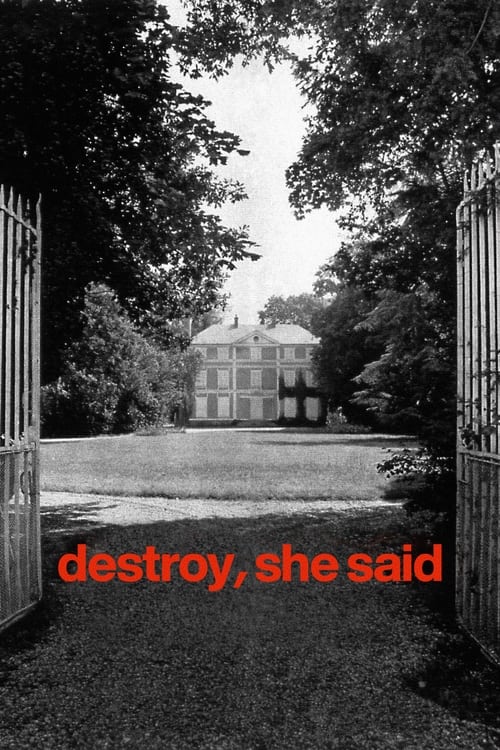
Marguerite Duras uses *Destroy, She Said* to dismantle the authority of the traditional narrator. The film succeeds in subverting gendered storytelling by replacing masculine-driven action with a fragmented, female-centric perspective. This formal experimentation creates a sophisticated exploration of perception. However, the film remains limited by its narrow demographic scope. The focus on a bourgeois intellectual class results in a lack of racial and LGBTQ+ diversity. The characters exist within a homogeneous social framework that lacks broader representation. Ultimately, the work is a triumph of psychological depth rather than social breadth. It excels at deconstructing identity and truth, even if it does not engage with a wide variety of lived experiences.
Category Breakdown
The film does not focus on non-straight relationships or same-sex intimacy. Although it explores the fluidity of identity, there are no clear queer character arcs or overt subtext.
Duras disrupts traditional hierarchies by centering the female psychological experience. The non-linear structure prioritizes female subjectivity over typical male-driven, action-oriented cinematic clichés.
The cast represents a homogeneous, upper-middle-class intellectual class. There is no evidence of significant racial blending or color-blind casting within the primary character arcs.
The narrative challenges Western notions of stable identity through moral relativism. It critiques institutionalized truth by presenting reality as a subjective, unstable construct tied to memory.
Themes of psychological fragmentation and communication breakdown serve as existentialist tools. These elements are not used as character-driven depictions of disability or as plot devices.
Present on Screen
Limited or Absent
Official Synopsis
In a secluded hotel circumscribed by a dense forest Max and Alissa Thor meet Stein and Elisabeth. Max, a professor of future history and an aspiring author, is immediately attracted to the brooding wife of industrialist Bernard Alione, Elisabeth, who is recovering from a miscarriage. Stein, a German Jew and potential writer, is infatuated by Alissa, Max's young wife and former student. During their sojourn the guests' identities gradually meld.
1986
1961

1983

1977

1973

1970

1981

1977
No reviews yet. Be the first to share your thoughts on this movie!
Use the rating form above to leave a star rating and optional review.