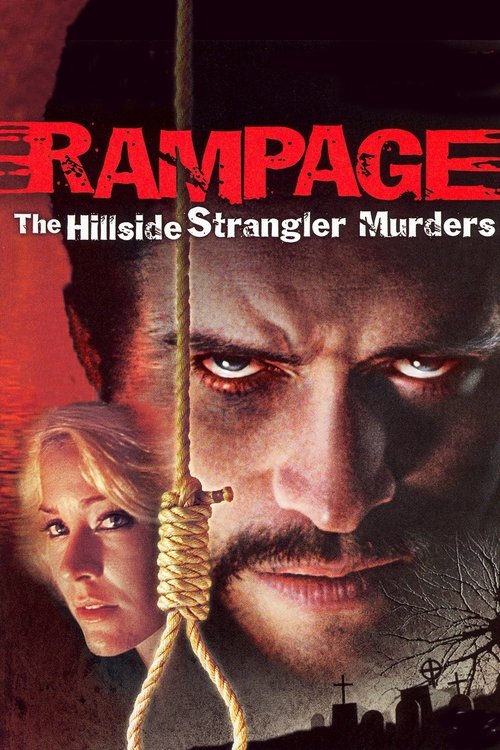
Rampage: The Hillside Strangler Murders
2006
No user ratings available yet
Representation score: 3.1 out of 10

Representation Score
Fair
1984
NRDirector
Lars von Trier
Runtime
104 minutes
Average Rating
No ratings yetNew Showbiz Analysis
Lars von Trier’s film is a work of formal subversion that prioritizes philosophical deconstruction over demographic variety. It challenges traditional Western institutionalism and the standard hunter/hunted dichotomy through a lens of moral relativism. However, the film's impact is heavily concentrated in its cultural critiques. Its monochromatic and Eurocentric aesthetic limits its reach regarding racial and LGBTQ+ representation. Ultimately, the film functions as a stylistic critique of civilization's decay rather than a diverse character study.
Category Breakdown
The film focuses on psychological fragmentation within a surreal, monochromatic landscape. There is no evidence of LGBTQ+ identities or same-sex relationships driving the narrative.
Female characters act as catalysts for the protagonist's mental breakdown rather than traditional gender roles. However, a lack of diverse gender expressions limits the film's impact.
The cast and visual palette are largely homogeneous, reflecting a localized aesthetic of historical decay. The film does not employ diverse casting to challenge its period setting.
The narrative offers a profound postmodern critique of Western stability and social order. It rejects singular moralities in favor of complex, situational ethics and moral relativism.
Psychological instability is treated as a metaphysical tool rather than a grounded depiction of neurodivergence. The protagonist's mental state serves the theme of crime rather than disability.
Present on Screen
Limited or Absent
Official Synopsis
Fisher, an ex-detective, decides to take one final case when a mysterious serial killer claims the lives of several young girls. Fisher, unable to find the culprit, turns to Osbourne, a writer who was once respected for his contributions to the field of criminology. Fisher begins to use Osbourne's technique, which involves empathizing with serial killers; however, as the detective becomes increasingly engrossed in this method, things take a disturbing turn.
2006

2016

1998

1931

2019

1992

1994
1983
No reviews yet. Be the first to share your thoughts on this movie!
Use the rating form above to leave a star rating and optional review.