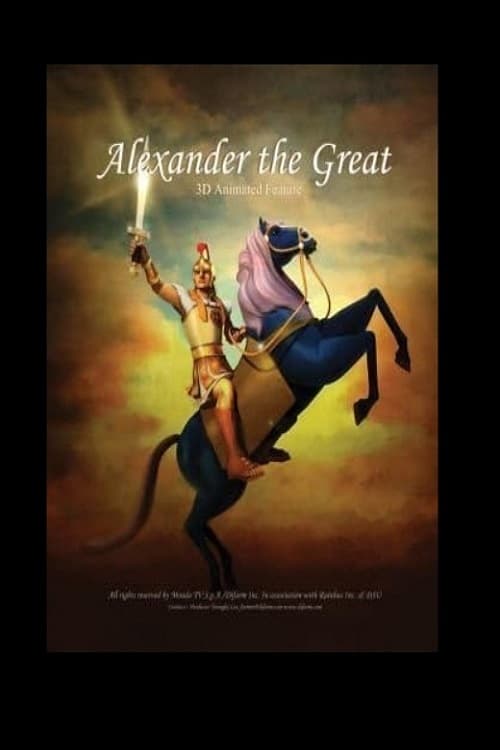
Alexander the Great
2006
No user ratings available yet
Diversity score: 3.8 out of 10

2002
Director
Richard Rich
Runtime
95 minutes
Average Rating
No ratings yetSynopsis
More than fourteen centuries ago, Mecca was filled with gambling, drunkenness, slavery, the mistreatment of women, and greed. The holy Ka'bah was littered with idol gods. Pilgrims came by the thousands to worship them. Quarysh, Mecca's ruling body, reveled in the their good fortune but cared little for the welfare of the pilgrims of Arabia.Against this dismal scene, a man named Muhammad (pbuh) retreated to a cave high above Mecca to pray. The events that transpired in that cave changed the course of human history.This is the story of the blessings of Muhammad (pbuh) - The Last Prophet.
Overall Score
Limited
Category Breakdown
LGBTQ+ Representation
The film adheres to a historical and religious framework. It does not feature LGBTQ+ characters or narratives exploring non-heteronormative identities.
Gender Representation
Women like Khadija provide emotional weight, yet roles remain within traditional domestic structures. The film prioritizes historical accuracy over subverting 7th-century gender hierarchies.
Racial & Ethnic Diversity
The production features a predominantly Middle Eastern cast, aligning with the geographical reality of the Arabian Peninsula. It avoids the whitewashing common in Western historical epics.
Religious & Cultural Diversity
As a hagiography of Islam, the film depicts the disruption of Meccan social orders. It aligns with traditional religious values rather than secular critiques.
Disability Representation
There is no discernible focus on visible or invisible disabilities within the narrative.
Strengths
Areas for Improvement
AI Analysis
Muhammad: The Last Prophet is a traditional biographical animation that prioritizes religious fidelity and historical authenticity. It succeeds in providing a culturally specific representation of 7th-century Arabia, avoiding the casting biases often found in Western productions. However, the film functions as a preservation of theological narrative rather than a deconstruction of social norms. By adhering strictly to the period's religious and societal structures, it lacks progressive intersectional representation. The focus remains on the establishment of a faith-based institution, which results in a narrative that reinforces traditional hierarchies rather than challenging them.
No reviews yet. Be the first to share your thoughts on this movie!
Use the rating form above to leave a star rating and optional review.