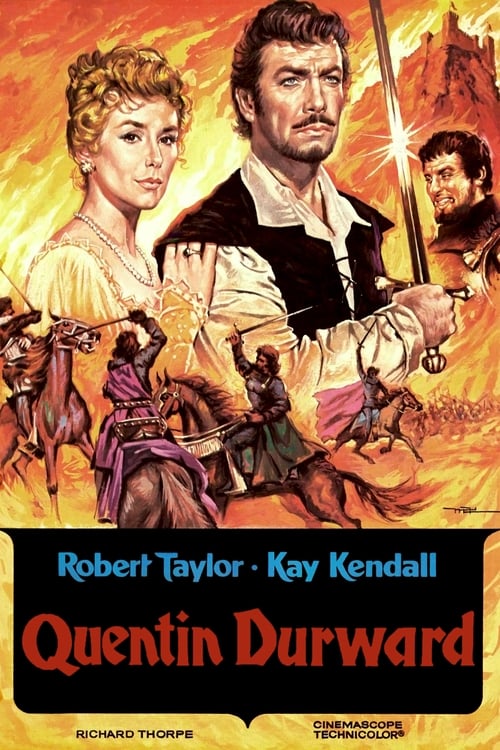
Quentin Durward
1955
No user ratings available yet
Diversity score: 1.4 out of 10

1953
NRDirector
Richard Thorpe
Runtime
115 minutes
Average Rating
No ratings yetSynopsis
In Camelot, kingdom of Arthur and Merlin, Lancelot is well known for his courage and honor. But one day he must quit Camelot and the Queen Guinevere's love, leaving the Round Table without protection.
Overall Score
Minimal
Category Breakdown
LGBTQ+ Representation
The film operates within a strictly heteronormative framework. It focuses entirely on the romantic entanglements between Lancelot, Guinevere, and Arthur, offering no queer subtext or non-cisnormative identities.
Gender Representation
Power dynamics center on masculine leadership and the chivalric code. While Guinevere possesses some agency, her arc remains tethered to her relationships with the male protagonists.
Racial & Ethnic Diversity
The casting is homogeneous, featuring a primarily white, European ensemble. It presents a monolithic view of Britain that reflects 1950s Hollywood standards rather than a pluralistic society.
Religious & Cultural Diversity
The narrative celebrates traditional Western monarchical institutions and the divine right of kings. It frames the struggle as a binary between civilization and chaos, reinforcing centralized authority.
Disability Representation
There are no significant depictions of visible or invisible disabilities. Characters are presented as archetypal, physically idealized specimens of the heroic epic genre.
Strengths
Areas for Improvement
AI Analysis
This production is a quintessential example of traditionalist mid-century filmmaking. It prioritizes the stability of the monarchy and moral absolutism, reinforcing established social and political hierarchies rather than disrupting them. The film lacks intersectional complexity, relying on a homogeneous cast and a narrative structure that upholds patriarchal and Western institutional values. It functions as a reinforcement of the era's conventional cinematic standards.
No reviews yet. Be the first to share your thoughts on this movie!
Use the rating form above to leave a star rating and optional review.
