Find another title
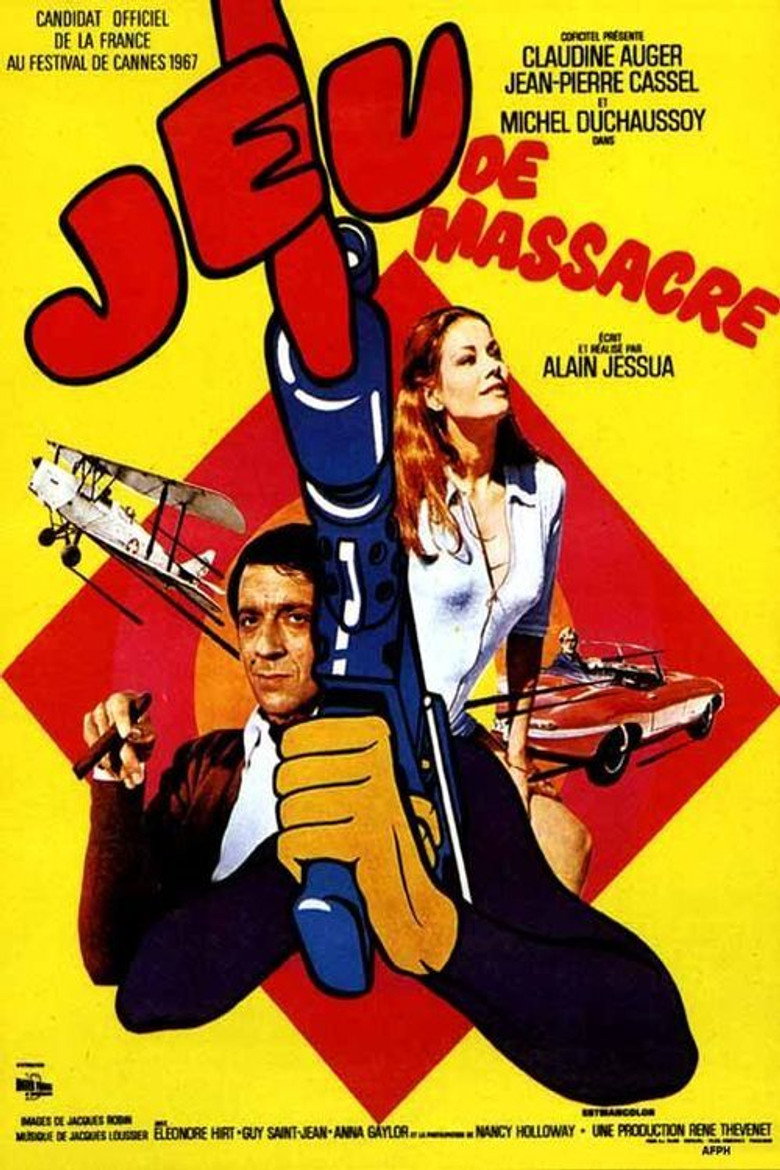
The Killing Game
1967
Director
Alain Jessua
Runtime
90 minutes
Average Rating
No ratings yetSynopsis
Two cartoonists meet a playboy who lives out the fantasies created in their cartoons. He hires them to create a new comic strip. As they work on the new strip, the playboy begins to live it out. Unfortunately, the new strip deals with murder.
Where to Watch
Diversity & Representation
Overall Score
Fair
Category Breakdown
LGBTQ+ Representation
The film explores a playboy's hedonistic lifestyle and the blurring of art and reality. However, there is no explicit evidence of queer identities or a critique of heteronormativity.
Gender Representation
The narrative centers on the creative agency of two cartoonists. This setup potentially subverts traditional power dynamics by allowing creators to dictate the actions of a wealthy protagonist.
Racial & Ethnic Diversity
As a 1960s European production, the film appears to focus on a localized, homogeneous social circle. There is no evidence of a diverse or non-Anglo-Saxon majority cast.
Religious & Cultural Diversity
The story critiques consumerism and the detachment of the elite from moral reality. It challenges social order by blurring the lines between artistic fantasy and actual murder.
Disability Representation
The narrative contains no mention of characters with visible or invisible disabilities.
Strengths
- The film offers a sharp critique of consumerism and the moral detachment of the wealthy elite.
- It subverts traditional power dynamics by giving creative agency to the artists over a wealthy protagonist.
Areas for Improvement
- The narrative lacks explicit representation of LGBTQ+ identities or non-heteronormative lifestyles.
- The cast and setting appear homogeneous, lacking racial and ethnic diversity typical of modern cinema.
AI Analysis
The film functions primarily as a thematic critique of class and consumerism rather than a showcase for demographic diversity. Its strength lies in how it deconstructs the power of the elite through the lens of creative fantasy. While the social circle appears homogeneous and typical of late 1960s European cinema, the story subverts traditional hierarchies. The inversion of control—where artists influence a wealthy man's behavior—provides a moderate departure from standard masculine dominance. Ultimately, the work lacks explicit representation of LGBTQ+ identities or racial diversity. It relies instead on moral relativism and the disruption of social stability to engage its audience.
Rate this Movie
Reviews
No reviews yet. Be the first to share your thoughts on this movie!
Use the rating form above to leave a star rating and optional review.