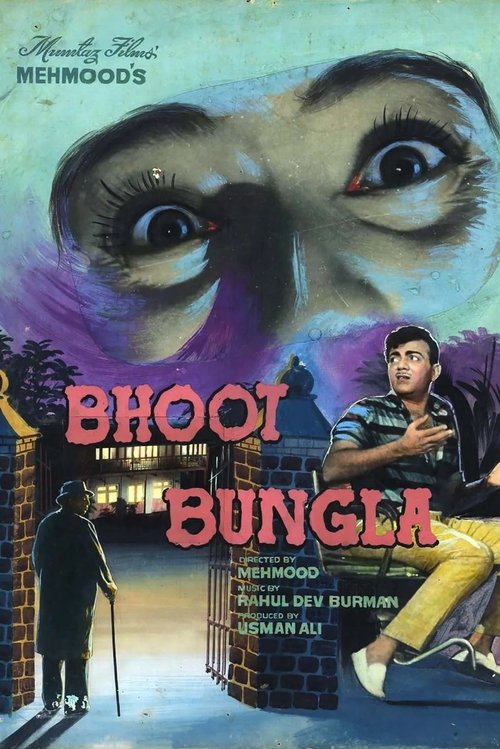
Bhoot Bungla
1965
No user ratings available yet
Representation score: 3.0 out of 10

Representation Score
Limited
1962
Director
Biren Nag
Runtime
158 minutes
Average Rating
No ratings yetNew Showbiz Analysis
Bees Saal Baad is a genre-driven mystery-thriller reflecting the social standards of 1962. It successfully provides a culturally specific South Asian perspective, grounding the horror and mystery in local customs and rural settings. However, the film maintains traditional gender hierarchies. Although the plot is driven by a violent act of misogyny, the resolution relies on supernatural vengeance rather than social progress or female empowerment. Ultimately, the film serves as a moral fable, addressing transgressions through cosmic justice while upholding the era’s conventional views on identity and social power dynamics.
Category Breakdown
The film follows traditional romantic storylines typical of the early 1960s. It does not include any representations of LGBTQ+ identities or narratives that challenge the assumption that everyone is straight.
Gender roles in the film are mostly traditional, with women often portrayed as romantic interests or victims of systemic violence. Female characters express their power through supernatural means rather than through social structures.
Set in rural Bengal, the film focuses on a South Asian cultural context. It avoids Western-centric viewpoints by emphasizing local social structures and identities.
The story revolves around concepts of karma and traditional morality. It critiques the landed aristocracy using the lens of moral consequences rather than a broader critique of social class structures.
The film does not prominently feature any visible or invisible disabilities as central narrative drivers or character traits.
Present on Screen
Limited or Absent
Official Synopsis
After a lusty Thakur rapes a young girl, she kills herself. Thereafter, the Thakur is killed by what the local people call the girl's vengeful spirit. Then the Thakur's son is also killed in a similar way. Thereafter the brother of the Thakur is also killed. The grandson of the Thakur, Kumar Vijay Singh (Biswajeet) returns from abroad to claim his ill-fated legacy. He is warned to stay away from the grounds that have killed his ancestors, but he intends to find out who or what is behind the killings, and hires a private detective, Gopichand Jasoos (Asit Sen). Kumar meets with Radha (Waheeda Rehman), the daughter of the local doctor, Ramlal Vaid (Manmohan Krishan), and both eventually fall in love. Then a man is found dead wearing the clothes of Kumar Vijay, and Kumar Vijay must now decide to stay away from his new residence, or continue to live there, and fear for his life everyday until death.
1965
1939
1992
1972
1976
1959

1970

1992
No reviews yet. Be the first to share your thoughts on this movie!
Use the rating form above to leave a star rating and optional review.