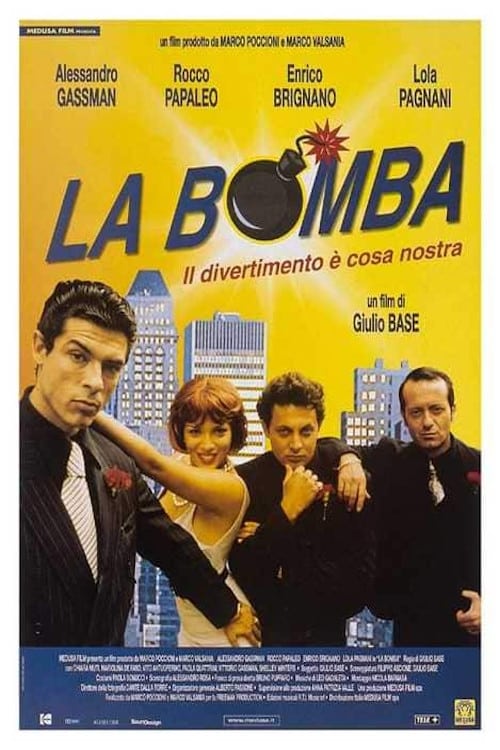
La bomba
1999
No user ratings available yet
Diversity score: 3.6 out of 10

2002
Director
Enrico Caria
Runtime
78 minutes
Average Rating
No ratings yetOverall Score
Limited
Category Breakdown
LGBTQ+ Representation
The film lacks explicit evidence of non-cisnormative identities or narratives that critique heteronormativity. It appears to operate within the conventional social structures typical of early 2000s Mediterranean cinema.
Gender Representation
While female cast members are present, there is no indication they subvert traditional gender hierarchies. The narrative likely relies on standard comedic gender dynamics of its era.
Racial & Ethnic Diversity
The cast shows some ethnic variety, notably through Zuleica Dos Santos. However, these identities seem incidental rather than central to the film's thematic core.
Religious & Cultural Diversity
The story focuses on localized social norms and situational humor. It does not appear to prioritize secularism or institutional critiques to deconstruct established social structures.
Disability Representation
There is no evidence of characters with visible or invisible disabilities. The film does not use neurodivergence or physical disability as a driver for character development.
Strengths
Areas for Improvement
AI Analysis
Blek Giek functions as a conventional regional Italian comedy that prioritizes localized archetypes over complex identity politics. While the casting avoids total homogeneity, the representation feels incidental rather than intentional. The film adheres to the traditional social and gender hierarchies common to its genre and era. It lacks the narrative architecture required to disrupt established power structures or offer intersectional character studies. Ultimately, the work remains within the bounds of standard comedic storytelling, offering little in the way of systemic subversion or diverse thematic depth.
No reviews yet. Be the first to share your thoughts on this movie!
Use the rating form above to leave a star rating and optional review.