
Wasao
2011
No user ratings available yet
Representation score: 3.9 out of 10
Representation Score
Fair
2003
Director
Jōji Matsuoka
Runtime
109 minutes
Average Rating
No ratings yetNew Showbiz Analysis
Farewell, Kuro is a sentimental period piece that prioritizes emotional resonance and communal bonds over the exploration of diverse identities. The film focuses on the relationship between a high school community and a stray dog, emphasizing localized storytelling. The narrative structure adheres to the social hierarchies of 1960s Japan. It does not aim to disrupt established norms or critique heteronormativity, capitalism, or Western influence, favoring a traditionalist view of social harmony. Given its historically specific and culturally homogeneous setting, the film lacks elements of racial diversity or representation of various backgrounds. It remains a character-driven story centered on humanistic, localized storytelling.
Category Breakdown
The film does not include explicit LGBTQ+ character arcs or non-cisgender identities. It maintains a neutral stance typical of traditional Japanese domestic dramas from this era.
Set in a 1960s high school, the film likely reinforces period-accurate social structures. There is no evidence of challenging traditional masculine authority or gender roles.
The story is set in a culturally homogeneous Japanese environment in Nagano. It reflects the historical reality of the 1960s without pursuing ethnic blending.
The narrative highlights social cohesion and communal stability through the bond between a school and a stray dog. It leans toward a traditionalist appreciation for shared experiences.
There is no verifiable evidence regarding the inclusion of neurodivergent characters or individuals with physical disabilities in this production.
Present on Screen
Limited or Absent
Official Synopsis
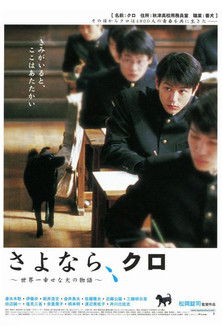
Based on a true story set in Matsumoto city, Nagano, during 1960s. A stray dog wanders into a high school's grounds. The dog, named Kuro, stays at the school and becomes a special friend to everyone.
2011

1987

2009

2024

2025

2000

2011

2011
No reviews yet. Be the first to share your thoughts on this movie!
Use the rating form above to leave a star rating and optional review.