
Fanatyk
2017
No user ratings available yet
Representation score: 2.9 out of 10
Representation Score
Fair
2004
Director
Lee Sang-hoon
Runtime
102 minutes
Average Rating
No ratings yetNew Showbiz Analysis
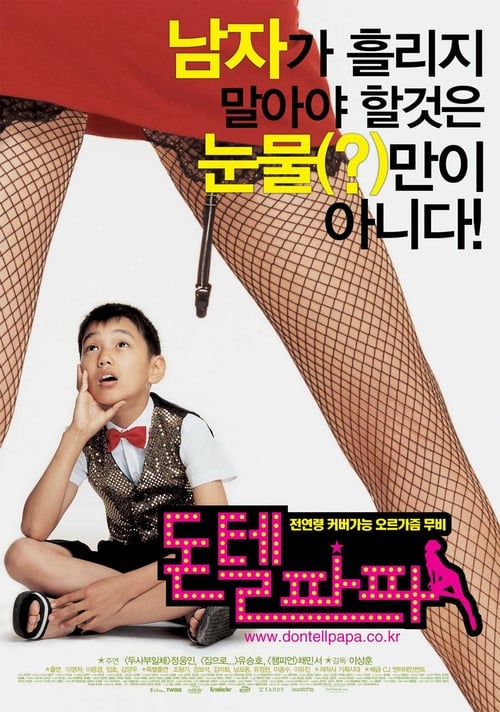
Don't Tell Papa operates as a conventional family drama. The story revolves around interpersonal conflicts within a traditional family structure, emphasizing the strained relationship between a father and his son. The film does not incorporate the complexities of multiple identities or disrupt established social hierarchies, adhering to the standard narrative patterns of its time. Overall, the film focuses on individual family dynamics and domestic struggles without addressing broader societal critiques.
Category Breakdown
The film does not feature any visible LGBTQ+ narratives or characters with non-straight identities. It follows a traditional storyline focused on a father-son relationship.
The story centers around the masculine struggles of a father and son. Although there are female characters, the narrative does not challenge traditional gender roles.
Being a South Korean production, the film showcases a culturally uniform cast reflecting the typical demographics of the local film industry at the time of its release.
The plot explores traditional family dynamics through internal conflicts. It emphasizes personal issues rather than critiquing systemic religious or cultural institutions.
There is no indication of characters with visible or invisible disabilities in the film.
Present on Screen
Limited or Absent
Official Synopsis
A story about a third-rate DJ who finds his relationship with his young son rapidly deteriorating.
2017
2022

2016

2005

2017

1994

2005

2014
No reviews yet. Be the first to share your thoughts on this movie!
Use the rating form above to leave a star rating and optional review.