Colorful Holland
1950
No user ratings available yet
Representation score: 1.1 out of 10
Representation Score
Minimal
1959
SDirector
Gösta Lewin
Runtime
85 minutes
Average Rating
No ratings yetNew Showbiz Analysis
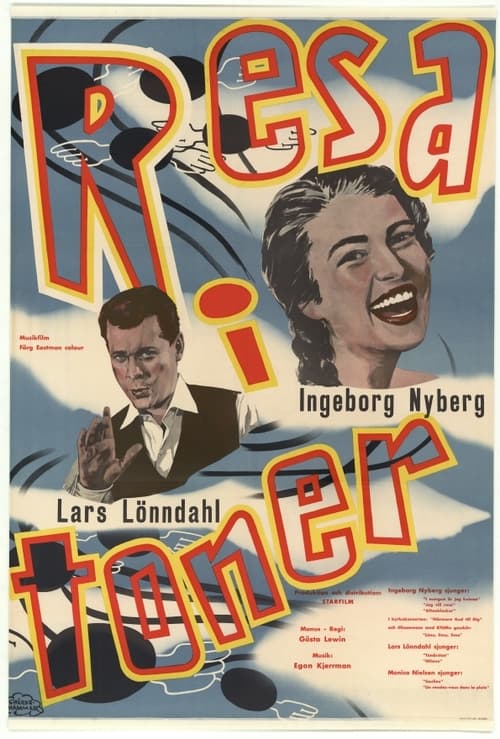
Travel in tones is a mid-century observational documentary centered on a singular, individual pursuit. The film functions as a personal travelogue of Ingeborg Nyberg’s journey from Stockholm to Milan, prioritizing her musical education over complex social commentary. While the film highlights women's ability to drive the story through Nyberg's independent travel and professional ambitions, it lacks demographic diversity. The narrative remains confined to a homogeneous European setting, offering little room for multi-layered character development or the disruption of social hierarchies. Ultimately, the work reflects the standard documentary structures of its era. It provides a record of cultural exploration through a traditional Western lens rather than engaging with diverse identities or systemic critiques.
Category Breakdown
The film does not include any LGBTQ+ characters or non-cisgender identities. It focuses solely on the protagonist's musical education and travels.
Ingeborg Nyberg is a central female protagonist who drives the narrative through her own actions. She shows independence by traveling across Europe to pursue professional vocal training.
The film follows a specific European route from Sweden to Italy. There is no indication of a multi-ethnic cast or non-white representation in the settings.
The documentary emphasizes personal growth through exposure to foreign cultures. It follows a traditional Western framework of travel and cultural appreciation without a critical perspective.
The film does not depict any physical or neurodivergent identities. Its focus remains on the protagonist's musical journey.
Present on Screen
Limited or Absent
Official Synopsis
Ingeborg Nyberg makes a dream trip to Italy to study singing. She drives from Stockholm in her own car. She passes Helsingborg, Helsingør and Hamburg and continues through Holland and Belgium to finally reach Italy and the final destination Milan via Paris and Nice in France. There she takes singing lessons and absorbs the country's culture.
1950

1994
1923
1993
1981

2021

2007

1926
No reviews yet. Be the first to share your thoughts on this movie!
Use the rating form above to leave a star rating and optional review.