Find another title
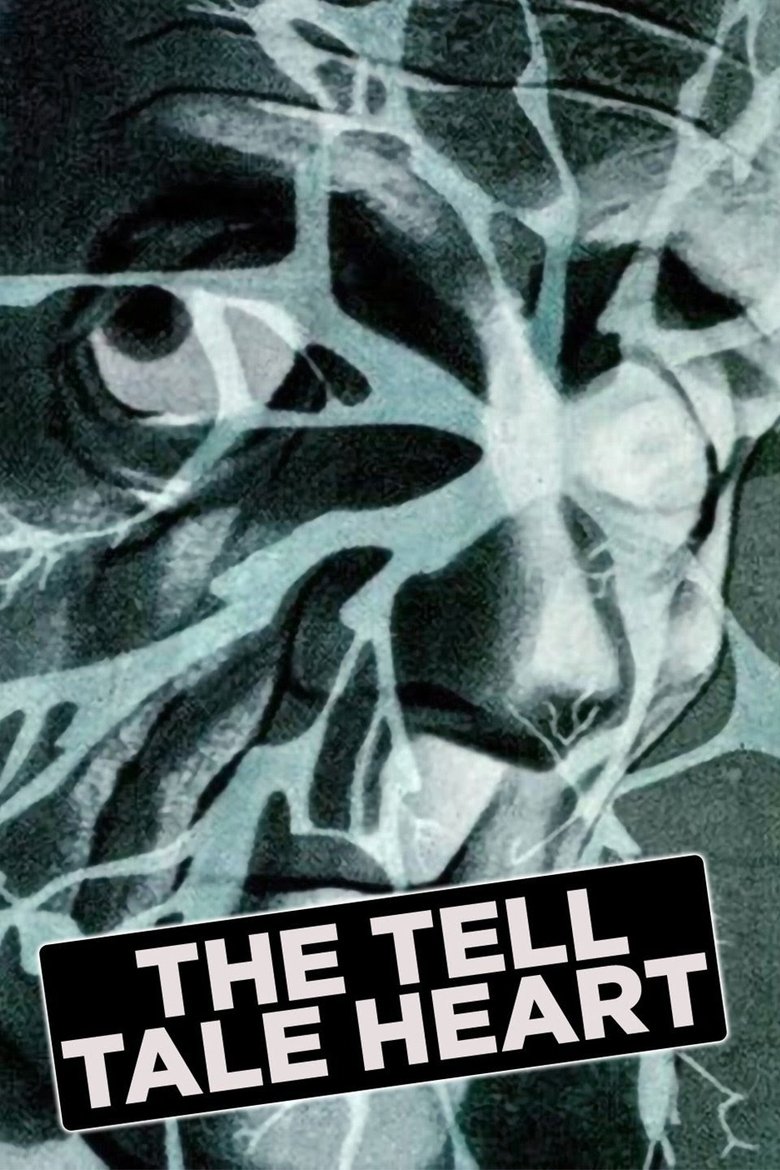
The Tell-Tale Heart
1953
ApprovedDirector
Ted Parmelee
Runtime
8 minutes
Average Rating
No ratings yetSynopsis
A man's sanity is a point of contention as he confesses to murdering an elderly man, driven by the victim's pale blue 'vulture eye', culminating in guilt-induced auditory hallucinations of the victim's beating heart.
Where to Watch
Diversity & Representation
Overall Score
Limited
Category Breakdown
LGBTQ+ Representation
The narrative is strictly confined to the interaction between the narrator and the elderly victim. No non-cisnormative identities or queer subtext are present in this animated iteration.
Gender Representation
The film operates within a narrow domestic framework. It lacks female agency or diverse gender expressions, resulting in a narrative that exists in a minimal gendered vacuum.
Racial & Ethnic Diversity
The film does not utilize color-blind casting or diverse ethnic portrayals. Character archetypes align with mid-century Western animation standards, presenting a homogeneous perspective.
Religious & Cultural Diversity
The story offers a study of subjective morality and moral relativism. However, it functions as a study of psychological collapse rather than a critique of Western institutions.
Disability Representation
The protagonist exhibits clear signs of neurodivergence and severe mental health crises. These elements drive the horror through the traditional 'madman' trope rather than lived experience.
Strengths
- Provides a nuanced study of subjective morality and the narrator's internal logic.
- Effectively explores the complexities of mental instability and psychological collapse.
Areas for Improvement
- Lacks female agency and diverse gender expressions within the narrative.
- Relies on the traditional 'madman' trope rather than portraying neurodivergence through lived experience.
- Presents a homogeneous perspective that lacks intentional racial intersectionality.
AI Analysis
This 1953 animated adaptation of Edgar Allan Poe’s work functions primarily as a claustrophobic psychological character study. The narrative architecture focuses on an internal descent into madness rather than external social dynamics or intersectional representation. The film prioritizes atmospheric tension and individual pathology. Because the setting is a singular domestic space, the capacity for diverse social engagement is structurally limited by the genre and period. Ultimately, the work explores the breakdown of moral norms and mental instability. It does not engage with broader systemic or identity-based diversity, remaining a traditional piece of psychological horror.
Rate this Movie
Reviews
No reviews yet. Be the first to share your thoughts on this movie!
Use the rating form above to leave a star rating and optional review.