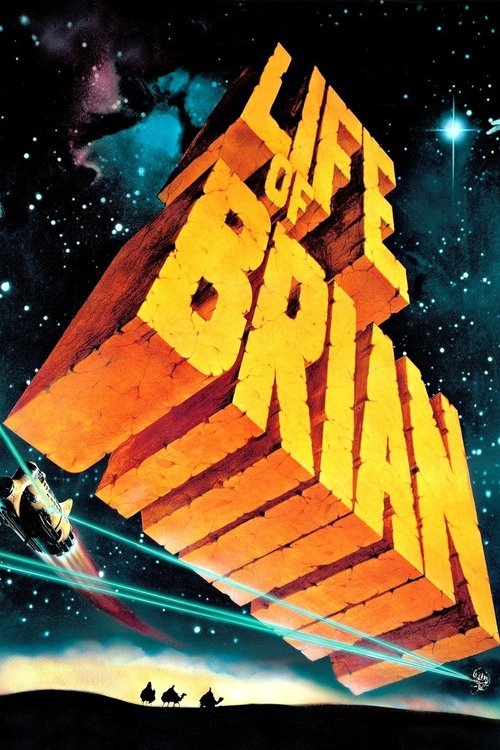
Life of Brian
1979
No user ratings available yet
Diversity score: 4.3 out of 10

1983
RDirector
Terry Jones
Runtime
107 minutes
Average Rating
No ratings yetSynopsis
Life's questions are 'answered' in a series of outrageous vignettes, beginning with a staid London insurance company which transforms before our eyes into a pirate ship. Then there's the National Health doctors who try to claim a healthy liver from a still-living donor. The world's most voracious glutton brings the art of vomiting to new heights before his spectacular demise.
Overall Score
Limited
Category Breakdown
LGBTQ+ Representation
The film lacks narrative-driven LGBTQ+ characters or explorations of non-cisnormative identities. It avoids derogatory tropes but remains largely neutral, focusing instead on biological functions and historical archetypes.
Gender Representation
Gender is viewed through a lens of biological grotesque rather than social subversion. While the film deconstructs the maternal experience via the visceral realities of childbirth, it does not focus on progressive female agency.
Racial & Ethnic Diversity
Casting is largely reflective of period settings and an Anglo-centric comedic tradition. There is no evidence of intentional color-blind casting or a deliberate effort to disrupt racial hierarchies.
Religious & Cultural Diversity
The film excels by presenting religious dogma and divine judgment as bureaucratic and absurd. It utilizes satire to critique the perceived infallibility of religious institutions and totalitarianism.
Disability Representation
Physical dysfunction and bodily extremes are used for slapstick and grotesque comedic effect. These portrayals lack nuanced agency, instead utilizing bodily otherness as a tool for absurdity.
Strengths
Areas for Improvement
AI Analysis
Monty Python's The Meaning of Life is a work of absurdist deconstruction that prioritizes the dismantling of institutional authority over the exploration of identity. Its strength lies in its postmodern skepticism, using satire to undermine the sanctity of religion, the family unit, and traditional social hierarchies. However, the film's focus on the grotesque and the biological limits the depth of its social representation. While it successfully mocks the incompetence of authority figures, it fails to engage with intersectional identities, particularly regarding LGBTQ+ and neurodivergent narratives. Ultimately, the film functions as a critique of meaning and structure rather than a study of human diversity, resulting in a score that reflects its narrow, albeit intellectually disruptive, scope.
1979
1981

2008
1994

1985
2006
1987

1987

1972

1984
1971

1999
No reviews yet. Be the first to share your thoughts on this movie!
Use the rating form above to leave a star rating and optional review.