Find another title
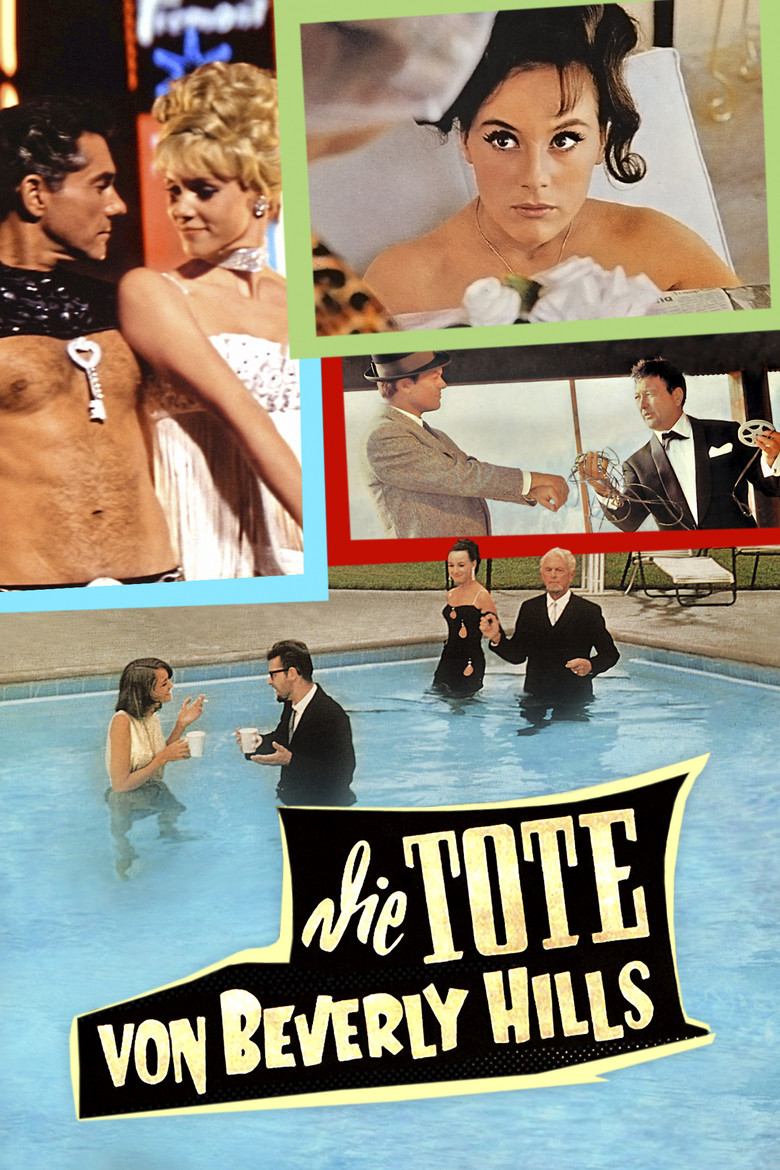
Dead Woman from Beverly Hills
1964
Director
Michael Pfleghar
Runtime
110 minutes
Average Rating
No ratings yetSynopsis
Detective C.G. begins to investigate the death of an attractive woman whose naked body was found in Beverly Hills. When he recovers her journal, he is taken into her past where he finds that she lead a sexually promiscuous life. Perhaps in the pages of the diary will be a clue to her killer's identity.
Where to Watch
Diversity & Representation
Overall Score
Limited
Category Breakdown
LGBTQ+ Representation
The film explores sexual themes that deviate from 1960s morality. However, it lacks explicit evidence of non-heteronormative identities or queer-coded subtext.
Gender Representation
The narrative centers on a woman's agency and private history. By focusing on her desires, the film complicates traditional depictions of submissive femininity.
Racial & Ethnic Diversity
The film appears to align with the homogeneous casting norms of 1960s Western cinema. There is no evidence of significant racial blending.
Religious & Cultural Diversity
The use of a diary to reveal an unconventional lifestyle suggests an interest in subjective truth. This challenges the singular morality often found in mid-century media.
Disability Representation
There is no mention of characters possessing visible or invisible disabilities.
Strengths
- The film disrupts gender norms by centering the narrative on a woman's private life and sexual agency.
- It explores moral relativism by presenting an unconventional lifestyle through a subjective, personal lens.
Areas for Improvement
- The film lacks racial and ethnic diversity, adhering to the homogeneous casting norms of its era.
- There is no explicit representation or agency provided for LGBTQ+ characters.
- The narrative lacks any depiction of characters with disabilities.
AI Analysis
Dead Woman from Beverly Hills functions as a transitional crime comedy that challenges mid-century social mores. It gains merit by centering the plot on a woman's sexual agency and personal history rather than purely male-driven detective work. However, the film remains limited by the demographic and stylistic constraints of 1964. It lacks intersectional depth and fails to provide significant representation for racial or LGBTQ+ identities. Ultimately, while it disrupts traditional gender hierarchies through its focus on female autonomy, it stays within a conventional Western crime structure.
Rate this Movie
Reviews
No reviews yet. Be the first to share your thoughts on this movie!
Use the rating form above to leave a star rating and optional review.