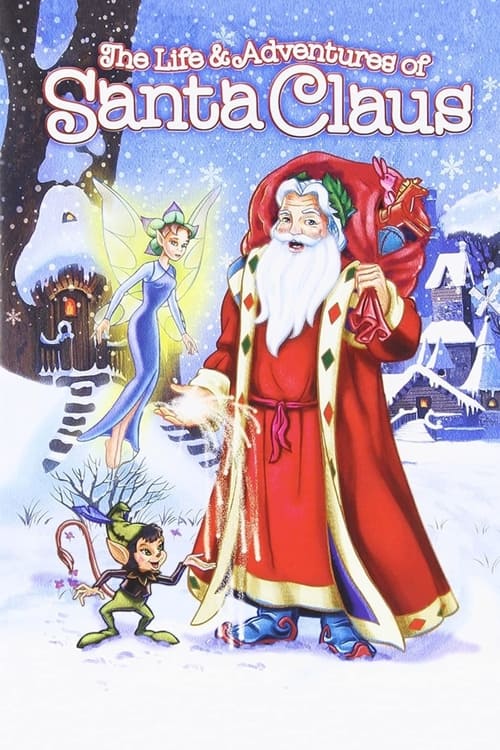
The Life & Adventures of Santa Claus
2000
No user ratings available yet
Representation score: 2.6 out of 10

Representation Score
Minimal
1985
GDirector
Arthur Rankin, Jr., Jules Bass
Runtime
50 minutes
Average Rating
No ratings yetNew Showbiz Analysis
This animated origin story functions as a foundational myth, prioritizing whimsical escapism and folklore over social critique. The narrative structure reinforces established cultural clichés and traditional moral binaries rather than deconstructing them. The film adheres to the social conventions of 1980s family animation, focusing on the benevolence of a central hero. While magical female entities exist, they largely serve the protagonist's journey within a traditional gendered hierarchy.
Category Breakdown
The film follows a traditional biographical structure centered on a singular mythological figure. There are no non-binary gender identities or same-sex romantic dynamics present.
Female entities like nymphs and fairies possess magical abilities but primarily occupy supportive, nurturing roles. The central heroic archetype is driven by the male protagonist, Claus.
The setting features non-human entities in a mythical forest. The human elements lean toward a homogeneous, Eurocentric aesthetic typical of 1980s fantasy.
The narrative reinforces traditional Western seasonal folklore and moral structures. It focuses on establishing cultural magic rather than critiquing Western institutions or religion.
No central characters are defined by physical or neurodivergent disabilities. Disability is not used as a narrative driver or tool for character development.
Present on Screen
Limited or Absent
Official Synopsis
The Great Ak calls a council of the Immortals to ask that Santa Claus be given immortality. And to justify it, he tells the history of Santa Claus. The Ak found an abandoned baby and gave it to a lioness and a fairy to raise, who named him Claus. When Claus grew up, the Great Ak showed him the evil and hardship in the world and Claus decides to live there and relieve some of the suffering. He decides to make toys for orphans, but King Awgwa, the ruler of the valley where Claus lives doesn't want the children to be happy, and there is a great battle among Immortals.
2000
1970

1990

1957
2001
1974
1974
2006
No reviews yet. Be the first to share your thoughts on this movie!
Use the rating form above to leave a star rating and optional review.