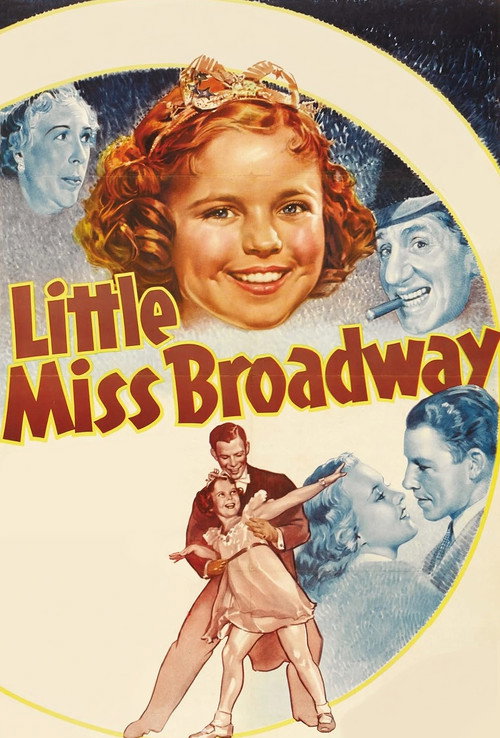
Little Miss Broadway
1938
No user ratings available yet
Representation score: 1.4 out of 10

Representation Score
Limited
1939
PassedDirector
Archie Mayo
Runtime
105 minutes
Average Rating
No ratings yetNew Showbiz Analysis
Archie Mayo’s film is a product of its time, functioning as a standard musical drama that reinforces rather than challenges 1939 social hierarchies. The narrative structure is built on traditional foundations, focusing on individual perseverance within established social structures. The film lacks the intentionality needed to disrupt conventional expectations around gender, race, or institutional authority. It operates within a framework of social stability, prioritizing personal triumph over systemic exploration.
Category Breakdown
The film does not include any queer narratives or non-cisgender identities. It follows the straight-centered social structures typical of 1939 cinema.
The character dynamics adhere to conventional period clichés without challenging traditional hierarchies. Women do not have roles that show superior intellect or significant influence over the story.
The production reflects the homogeneous casting standards of its time. The narrative centers on socioeconomic struggle without addressing multi-layered racial dynamics or featuring non-white protagonists.
The story frames hardships through personal struggle without critiquing systemic issues. It leans toward standard moralistic resolutions common to era-specific family dramas.
There is no portrayal of neurodivergence or physical disability with ability to act. The protagonist's struggles seem centered on behavioral or socioeconomic factors.
Present on Screen
Limited or Absent
Official Synopsis
The future is bleak for a troubled boy from a broken home in the slums. He runs away when his step father breaks his violin, ending up sleeping in the basement of a music school for poor children.
1938

1937

1934

1982

1959

1999

1935

1968
No reviews yet. Be the first to share your thoughts on this movie!
Use the rating form above to leave a star rating and optional review.