Find another title
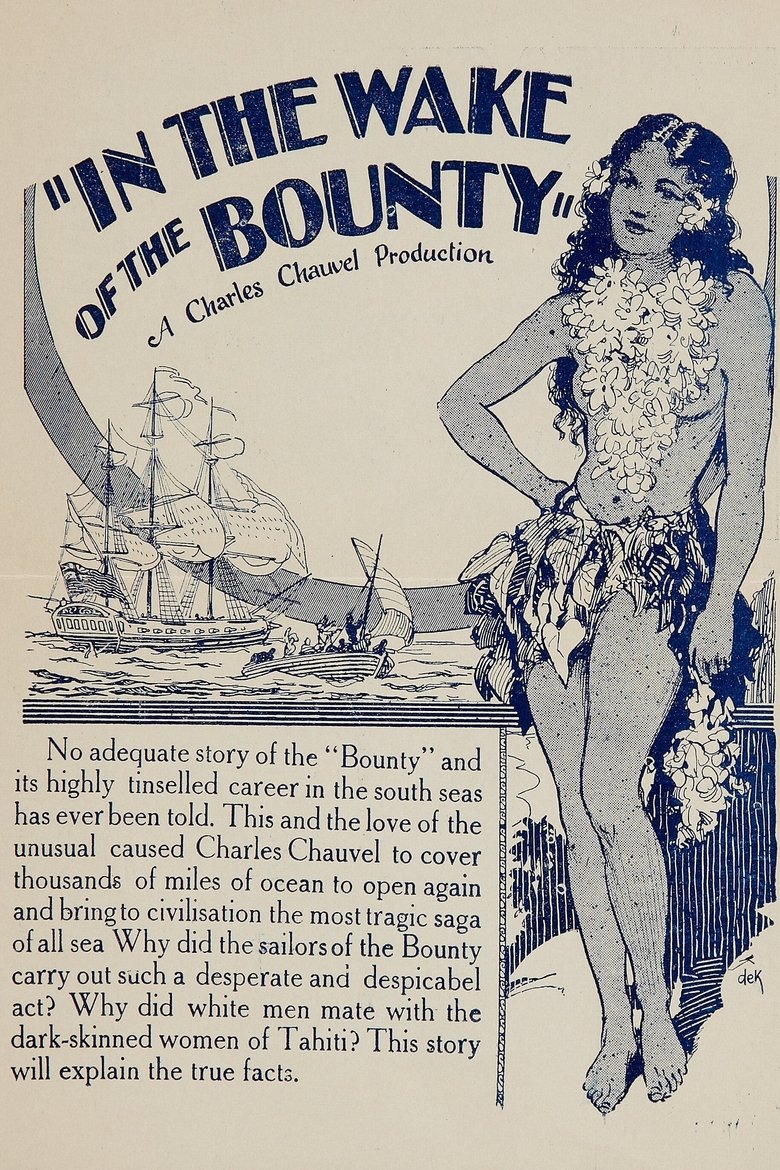
In the Wake of the Bounty
1933
Director
Charles Chauvel
Runtime
66 minutes
Average Rating
No ratings yetSynopsis
The film explores the story of the Bounty and is based on the 1932 novel Mutiny on the Bounty by Charles Nordhoff and James Norman Hall.
Where to Watch
Diversity & Representation
Overall Score
Minimal
Category Breakdown
LGBTQ+ Representation
The film lacks any depiction of non-cisnormative identities or same-sex intimacy. It adheres to the heteronormative social structures typical of 1930s maritime adventure cinema.
Gender Representation
The narrative centers on male-dominated hierarchies inherent to maritime mutiny stories. Female characters likely occupy traditional, non-authoritative roles within domestic or colonial settings.
Racial & Ethnic Diversity
Interactions between British sailors and Pacific Islanders likely reinforce colonial tropes. The film appears to depict indigenous populations through a standard colonial lens of the era.
Religious & Cultural Diversity
The story prioritizes Western historical epics, focusing on British maritime law and naval discipline. It aligns with era-specific values regarding individual heroism and institutional authority.
Disability Representation
There is no evidence of characters with disabilities being portrayed with agency. Physical impairment in this era often served as a plot device rather than a nuanced character study.
Strengths
- Provides a foundational look at early Australian cinematic identity through director Charles Chauvel.
- Offers a historical exploration of the maritime themes found in the 1932 novel Mutiny on the Bounty.
Areas for Improvement
- Lacks representation of LGBTQ+ identities or non-cisnormative characters.
- Reinforces colonial tropes and traditional gender hierarchies common to the 1930s.
- Provides minimal agency to non-Western characters or individuals with disabilities.
AI Analysis
In the Wake of the Bounty is a period adventure drama that functions as a traditional historical epic. It follows the established narrative structures of early 20th-century cinema, focusing on the historical mutiny of the HMS Bounty. The film operates within the social and cinematic constraints of 1933, emphasizing colonial maritime structures and established power dynamics. It lacks the intersectional complexity or subversion of social norms found in more progressive works. Ultimately, the production prioritizes Western maritime history and traditional hierarchies, offering a view of the era's standard adventure storytelling without significant demographic diversity.
Rate this Movie
Reviews
No reviews yet. Be the first to share your thoughts on this movie!
Use the rating form above to leave a star rating and optional review.