Find another title
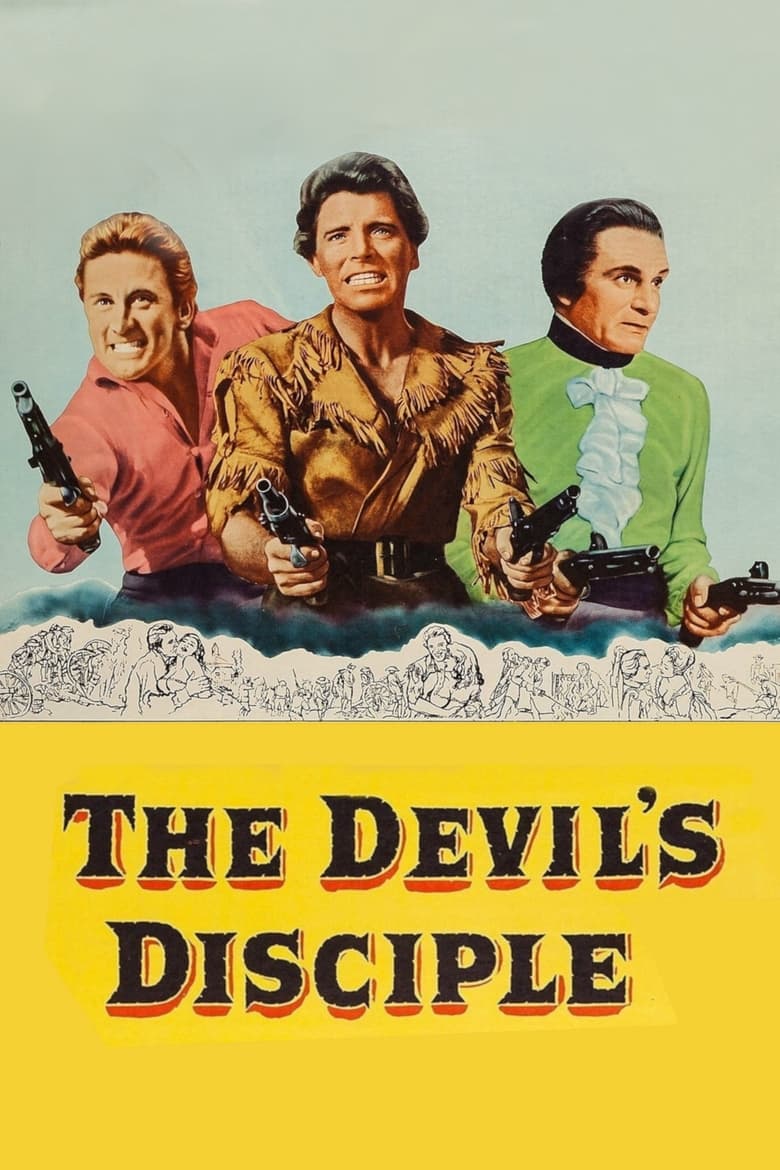
The Devil's Disciple
1959
ApprovedDirector
Guy Hamilton
Runtime
82 minutes
Average Rating
No ratings yetSynopsis
In a small New England town during the American War of Independence, Dick Dudgeon, a revolutionary American Puritan, is mistaken for local minister Rev. Anthony Anderson and arrested by the British. Dick discovers himself incapable of accusing another human to suffer and continues to masquerade as the reverend.
Where to Watch
Diversity & Representation
Overall Score
Fair
Category Breakdown
LGBTQ+ Representation
The film lacks LGBTQ+ characters or non-heteronormative identities. Social dynamics remain strictly within the traditional romantic structures of the late 18th century.
Gender Representation
Female characters, particularly Vivien Leigh's Judith Prim, possess significant agency and navigate political volatility. They engage in substantive dialogue, successfully passing the Bechdel test.
Racial & Ethnic Diversity
The cast is predominantly homogeneous, reflecting the historical setting and 1959 production standards. There is a notable absence of minority representation or color-blind casting.
Religious & Cultural Diversity
The narrative provides a sophisticated critique of religious authority and institutional hypocrisy. It prioritizes individual morality over the rigid, dogmatic structures of the church and state.
Disability Representation
There are no visible or invisible disabilities portrayed within the narrative.
Strengths
- Strong female agency through characters like Judith Prim who navigate political conflict.
- Intellectual subversion of religious and colonial authority through a post-colonial lens.
- A narrative that prioritizes individual morality over rigid, institutional dogma.
Areas for Improvement
- Lack of racial and ethnic diversity within the cast.
- Absence of LGBTQ+ representation or non-heteronormative identities.
- No portrayal of characters with visible or invisible disabilities.
AI Analysis
The film presents a dichotomy between demographic traditionalism and intellectual subversion. While the cast lacks racial and LGBTQ+ diversity, the story itself challenges the era's dominant power structures. By centering a protagonist who rejects social and religious norms, the film uses a post-colonial lens to question institutional legitimacy. This makes the work more progressive in its themes than its casting suggests. Ultimately, the film's strength lies in its deconstruction of Western institutions, even as it adheres to the cinematic conventions of its time regarding representation.
Rate this Movie
Reviews
No reviews yet. Be the first to share your thoughts on this movie!
Use the rating form above to leave a star rating and optional review.