Find another title
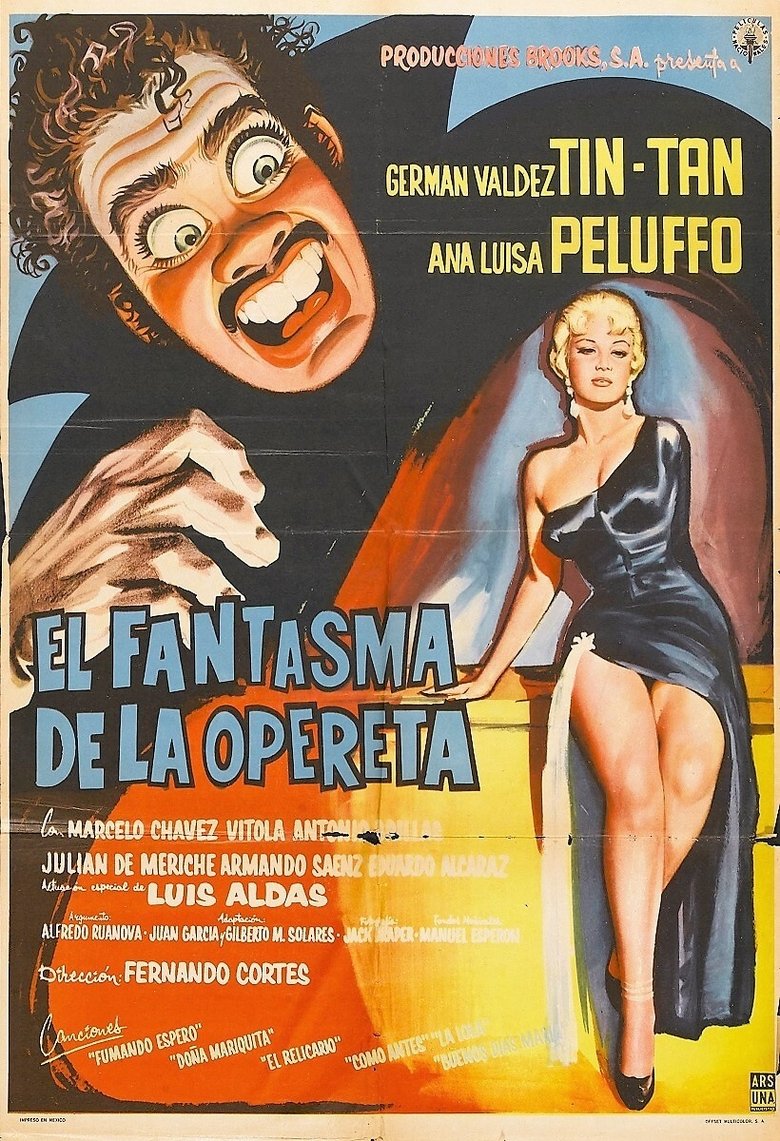
The Phantom of the Operetta
1960
Director
Fernando Cortés
Runtime
90 minutes
Average Rating
No ratings yetSynopsis
Aldo and his girlfriend Lucy reopen an abandoned opera house, but find out that the place is inhabited by a group of Phantoms wearing the Claude Rains 1943 Phantom of the Opera costume.
Where to Watch
Diversity & Representation
Overall Score
Limited
Category Breakdown
LGBTQ+ Representation
The film focuses on a traditional romantic pairing between Aldo and Lucy. There is no evidence of non-cisnormative identities or narratives that challenge heteronormativity.
Gender Representation
The story centers on a duo managing a business venture. While Aldo and Lucy act as partners, there is no clear subversion of traditional gender hierarchies.
Racial & Ethnic Diversity
The production lacks any mention of a diverse cast or non-Anglo-Saxon characters. It appears to adhere to the demographic norms typical of 1960.
Religious & Cultural Diversity
The setting utilizes a classic Western opera house and leans into established genre tropes. The plot focuses on mystery and spectacle rather than cultural deconstruction.
Disability Representation
No characters with visible or invisible disabilities are mentioned. There are no noted arcs involving neurodivergence or physical impairments.
Strengths
- The film utilizes recognizable cinematic iconography, such as the 1943 Claude Rains costume, to build its atmosphere.
Areas for Improvement
- The narrative lacks racial and ethnic diversity, appearing to follow the demographic constraints of its time.
- There is no evidence of LGBTQ+ representation or the subversion of traditional gender roles.
- The film does not include characters or storylines addressing disability or neurodivergence.
AI Analysis
The Phantom of the Operetta functions as a genre-blending mystery that relies heavily on established cinematic iconography. The narrative structure follows mid-century conventions, focusing on a central duo and a supernatural mystery within an opera house. Diversity is limited by the film's adherence to the era's demographic norms. The characters and themes prioritize traditional romantic tropes and entrepreneurial mystery over the inclusion of intersectional identities or the subversion of social hierarchies.
Rate this Movie
Reviews
No reviews yet. Be the first to share your thoughts on this movie!
Use the rating form above to leave a star rating and optional review.