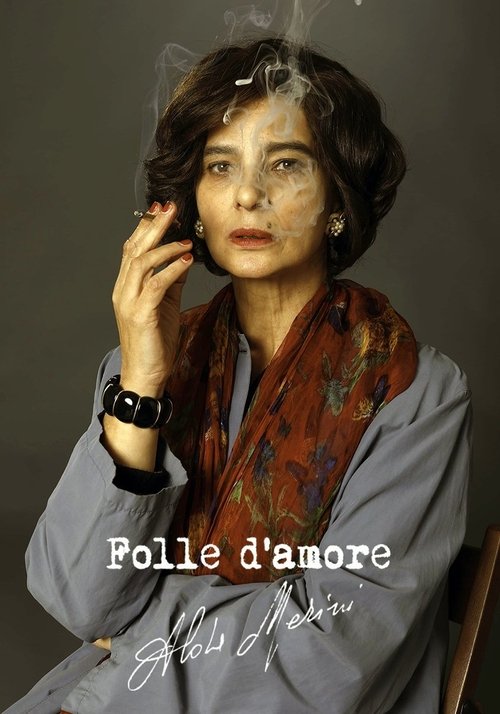
Folle d'amore - Alda Merini
2023
No user ratings available yet
Representation score: 8.5 out of 10
No Poster Available
Representation Score
Excellent
2013
Director
Antonietta De Lillo
Average Rating
No ratings yetNew Showbiz Analysis
Antonietta De Lillo’s documentary serves as a meaningful biographical study that elevates a voice historically positioned on the margins of social and psychological norms. By centering on Alda Merini, the film challenges traditional intellectual hierarchies and grants a neurodivergent subject profound control over her own legacy. The work excels in its portrayal of mental health and female intellectualism. It moves away from male-centric historical perspectives to focus on the internal life and subjective morality of a complex woman. However, the film's scope is narrow. It functions primarily as a localized European study, which limits its racial and ethnic diversity. While it offers deep psychological insight, it lacks broad demographic diversity.
Category Breakdown
The film explores themes of desire and identity through Alda Merini's verbal reflections. Although there are no explicit scenes of intimacy, Merini's literary persona challenges the assumption that everyone is straight or cisgender.
The documentary disrupts traditional hierarchies by centering a woman's intellectual authority. Merini serves as the primary driver of the discussion, having complete control over her own legacy.
As a localized Italian biographical study, the film lacks significant racial or ethnic diversity. The narrative remains focused on a specific European cultural and literary figure.
The film prioritizes individual truth over rigid institutional religious frameworks. Merini’s work explores spiritual and emotional relativism, challenging traditional social and religious conformity.
The film provides a platform for perspectives on mental health and neurodivergence. It emphasizes Merini's intellectual depth and control rather than treating her psychological struggles as a mere plot device.
Present on Screen
Limited or Absent
Official Synopsis
A portrait of Alda Merini, one of the most important and renowned literary figures of the twentieth century, realized with the inedited footage of a long conversation that the director Antonietta De Lillo had with her in 1995.
2023
2015
2021
2013
2018
2011
2022
2021
No reviews yet. Be the first to share your thoughts on this movie!
Use the rating form above to leave a star rating and optional review.