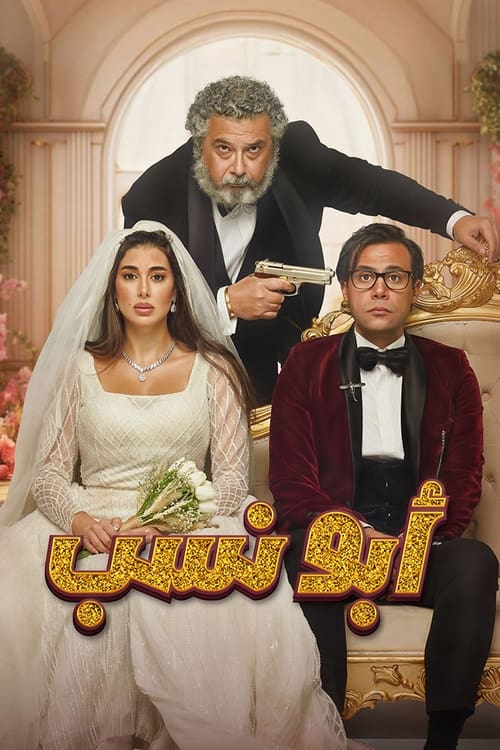
Abo Nasab
2023
No user ratings available yet
Representation score: 4.0 out of 10

Representation Score
Minimal
2026
Director
Moataz El Tony
Runtime
105 minutes
Average Rating
No ratings yetNew Showbiz Analysis
The film opens with Alaa, a radio host paralyzed by the prospect of commitment, a standard setup for a romantic comedy that quickly derails into action. The sold meaning is that Farida, a major arms dealer, is the "perfect" partner who fixes his indecision not through dialogue, but through force. The camera treats her criminal empire as a backdrop for domestic tension, normalizing violence as a tool for relationship management. The argument is that commitment is a state imposed by the more powerful party, and Alaa’s resistance is a temporary obstacle to be overcome. The ending, where he is dragged into dangerous situations, frames his autonomy as a liability and her control as the stabilizing force. This 2026 Egyptian comedy uses the genre’s lightness to mask a traditional hierarchy: the woman is powerful, but her power is exercised through the patriarchal script of forced marriage. The last image likely settles on their union, affirming that security and structure, even when bought with blood, are the ultimate rewards. The film’s internal logic pulls apart when it praises Farida’s agency while punishing Alaa for his, yet the tone remains warm, suggesting that the audience is meant to accept this coercion as a happy ending.
Category Breakdown
No queer characters or same-sex intimacy appear. The narrative tracks heterosexual courtship and forced marriage exclusively.
Farida wields power as an arms dealer, forcing a marriage on Alaa. Her agency is high, but the plot relies on male incompetence and traditional coercion.
The cast consists entirely of Egyptian actors. No non-white or diverse ethnic representation is depicted beyond the local cultural context.
Marriage is depicted as a binding, non-negotiable institution overriding individual choice. Farida’s criminal wealth is normalized as a source of power.
No characters with physical, mental, or sensory disabilities are named. Disability is not a narrative element or visual motif.
Present on Screen
Limited or Absent
Official Synopsis
Alaa, a radio host who fears commitment, enters relationships that end for trivial reasons until he meets Farida, who seems perfect. He then discovers she is one of the largest arms dealers. When he tries to leave her, she forces him to marry her, dragging him into a series of dangerous situations.
2023
2006
2019

2012

2015

2023

2025

2024
No reviews yet. Be the first to share your thoughts on this movie!
Use the rating form above to leave a star rating and optional review.