Find another title
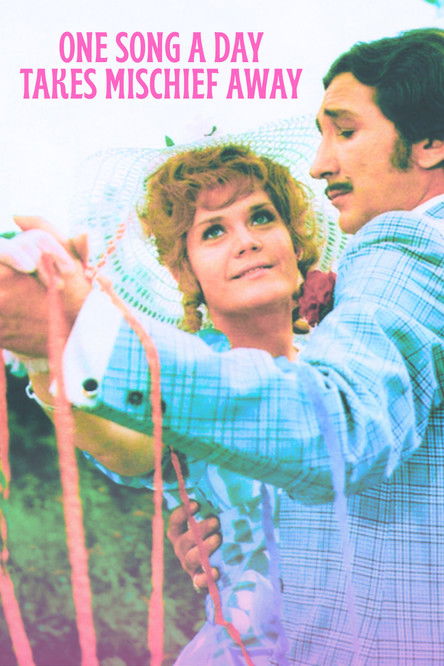
One Song a Day Takes Mischief Away
1970
Director
Krešimir Golik
Runtime
95 minutes
Average Rating
No ratings yetSynopsis
Set in pre-World War II Zagreb, the story is seen through the eyes of 6-year-old Perica Šafranek (played by Tomislav Žganec). A dandy from Zagreb, Mr Fulir (played by Relja Bašić), starts flirting with Perica's mother during a family picnic. At first, Perica's father doesn't notice anything, but wants to marry off Perica's aunt, so he invites the man to their residence. After multiple rendezvous, Perica's father becomes aware of Fulir's attempts to seduce his wife.
Where to Watch
Diversity & Representation
Overall Score
Limited
Category Breakdown
LGBTQ+ Representation
The film adheres to the heteronormative social structures of the 1930s. There are no depictions of same-sex intimacy or non-cisnormative gender identities present in the narrative.
Gender Representation
Female characters possess emotional depth but their agency is largely defined by relationships with men. The story reflects the patriarchal hierarchies of pre-WWII Zagreb and Dalmatia.
Racial & Ethnic Diversity
The film features a predominantly Croatian cast that reflects specific regional identities. It avoids Western-centric homogenization by focusing on authentic, localized ethnic textures.
Religious & Cultural Diversity
The narrative offers a lyrical appreciation for local traditions and communal life. It functions as a character study of a specific Mediterranean and Central European social fabric.
Disability Representation
There is no significant evidence regarding the portrayal of visible or invisible disabilities within the film's narrative or historical context.
Strengths
- Provides high degree of authentic regional representation through a localized Croatian cast.
- Captures specific cultural textures, music, and traditions of pre-WWII Zagreb.
- Avoids the homogenization often found in Western-centric period pieces.
Areas for Improvement
- Lacks intersectional complexity or representation of non-cisnormative identities.
- Female agency is limited by the patriarchal social structures of the setting.
- Does not subvert or critique the traditional gender roles of the era.
AI Analysis
Krešimir Golik’s film is a deeply localized period piece that prioritizes regional authenticity over modern social disruption. It succeeds in preserving a specific Croatian cultural identity through its music and communal settings, providing a sense of historical texture. However, the film remains firmly rooted in the traditional social hierarchies of the 1930s. This results in a lack of intersectional complexity, as gender roles and sexual orientations follow conventional, patriarchal norms of the era. Ultimately, the work serves as a nostalgic character study rather than a critique of systemic social structures, making it a culturally specific but socially conservative viewing experience.
Rate this Movie
Reviews
No reviews yet. Be the first to share your thoughts on this movie!
Use the rating form above to leave a star rating and optional review.