Find another title
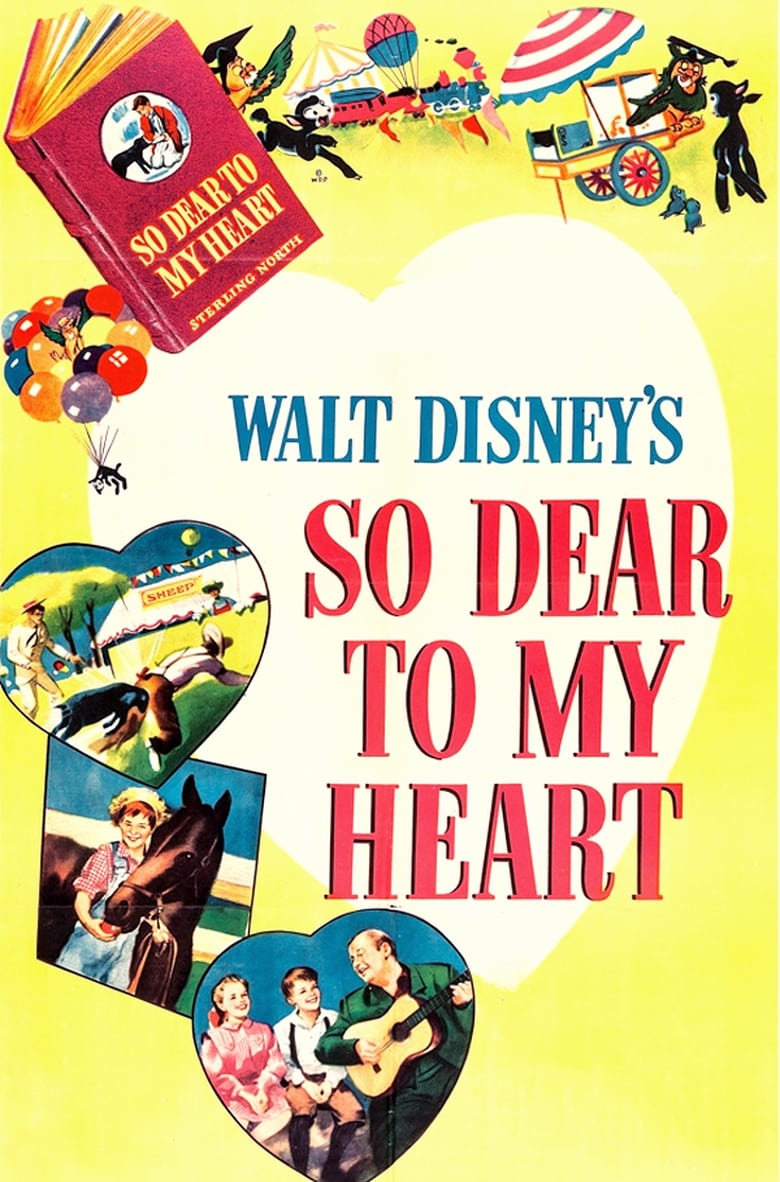
So Dear to My Heart
1948
NRDirector
Harold D. Schuster, Hamilton Luske
Runtime
82 minutes
Average Rating
No ratings yetSynopsis
The tale of Jeremiah Kincaid and his quest to raise his 'champion' lamb, Danny. Jeremiah's dream of showing Danny at the Pike County Fair must overcome the obstinate objections of his loving, yet strict, grandmother Granny. Jeremiah's confidant, Uncle Hiram, is the boy's steady ally.
Where to Watch
Diversity & Representation
Overall Score
Minimal
Category Breakdown
LGBTQ+ Representation
The film contains no representation of non-cisnormative identities or same-sex intimacy. Character dynamics remain strictly heteronormative throughout the story.
Gender Representation
While a young female protagonist provides the emotional core, the film reinforces traditional domestic hierarchies. Female roles focus on maternal authority and emotional labor.
Racial & Ethnic Diversity
The setting presents a homogeneous, Anglo-centric social landscape. There is a notable absence of racial or ethnic diversity within the primary cast.
Religious & Cultural Diversity
The narrative promotes mid-century Western traditionalism and conventional family values. It emphasizes respect for elder authority and the sanctity of the domestic sphere.
Disability Representation
No visible or invisible disabilities are portrayed as central to the character arcs. The film lacks representation for neurodivergent or physically disabled characters.
Strengths
- The film provides a clear, focused depiction of mid-century Western traditionalism and family values.
Areas for Improvement
- The narrative lacks racial, ethnic, and LGBTQ+ diversity, presenting a very homogeneous social landscape.
- There is no representation of disability or neurodivergent characters within the story.
- Gender roles remain confined to traditional domestic hierarchies and maternal authority.
AI Analysis
So Dear to My Heart is a quintessential mid-century melodrama that prioritizes a singular, homogeneous cultural perspective. It functions as a reinforcement of the social hierarchies and moral frameworks prevalent in 1948 rural America. The film celebrates traditional Western values, focusing on the stability of the nuclear family and respect for elder authority. It does not attempt to challenge or deconstruct established social norms. Because the narrative lacks intersectional identities, racial diversity, or LGBTQ+ representation, it remains a product of its era's demographic normalcy.
Rate this Movie
Reviews
No reviews yet. Be the first to share your thoughts on this movie!
Use the rating form above to leave a star rating and optional review.