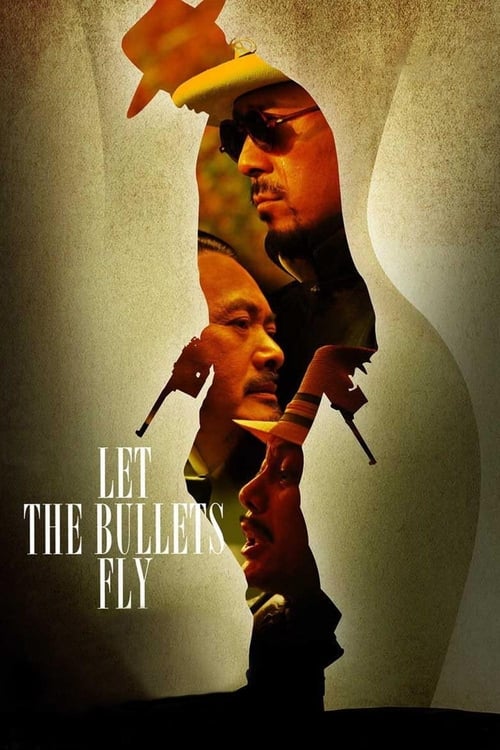
Let the Bullets Fly
2010
No user ratings available yet
Diversity score: 4.8 out of 10

2014
Director
Jiang Wen
Runtime
140 minutes
Average Rating
No ratings yetSynopsis
Set in 1920s Shanghai, Ma Zouri and Xiang Feitian establish a notorious beauty pageant called the Flowers Competition. All of the city's elite attend the gala event, but when Wanyan Ying unexpectedly wins, it sets into motion a series of tragic events that change their destinies.
Overall Score
Fair
Category Breakdown
LGBTQ+ Representation
The film lacks explicit depictions of LGBTQ+ identities or non-heteronormative romantic arcs. The narrative focuses on the heist and bandit dynamics within traditional 1920s social structures.
Gender Representation
The story centers on male-driven action and camaraderie. While the beauty pageant introduces women, they primarily serve as plot catalysts rather than autonomous agents driving the narrative.
Racial & Ethnic Diversity
This domestic production offers a robust exploration of Chinese identity during the Warlord Era. It avoids Western-centric casting tropes, focusing instead on localized social stratification.
Religious & Cultural Diversity
The film excels at deconstructing traditional institutions and social orders. It portrays a chaotic landscape where moral relativism and survival supersede singular, traditional moral codes.
Disability Representation
There are no prominent depictions of physical or neurodivergent disabilities. Characters are defined almost entirely by their physical capabilities and socio-economic roles.
Strengths
Areas for Improvement
AI Analysis
Jiang Wen’s film is a stylistically complex work that prioritizes postmodernism and moral ambiguity over traditional representation. It succeeds in providing a deeply localized Chinese perspective, avoiding the pitfalls of Western-centric casting and offering a sophisticated critique of centralized authority. However, the film remains heavily anchored in traditional hierarchies. The narrative architecture favors masculine archetypes of banditry and military power, leaving little room for diverse gender roles or non-heteronormative identities. Ultimately, the film's strength lies in its cultural authenticity and its subversion of 'good vs. evil' dichotomies, even as it lacks meaningful inclusion regarding disability or LGBTQ+ spectrums.
No reviews yet. Be the first to share your thoughts on this movie!
Use the rating form above to leave a star rating and optional review.