O Noviço Rebelde
1997
No user ratings available yet
Representation score: 5.6 out of 10
Representation Score
Fair
2013
Director
Kankuro Kudo
Runtime
120 minutes
Average Rating
No ratings yetNew Showbiz Analysis
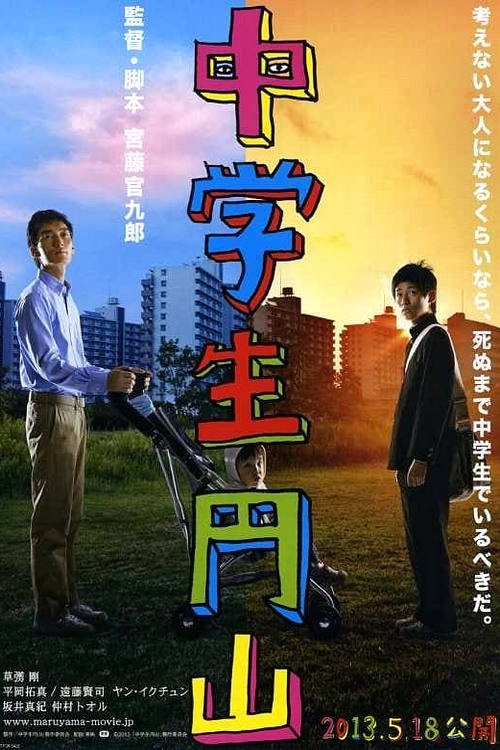
Maruyama, the Middle Schooler offers a character study that finds strength in its disruption of social norms rather than broad demographic representation. By focusing on a single father who clashes with the local community, the film challenges traditional domestic and masculine roles. However, the film remains quite narrow in its scope. It lacks visible LGBTQ+ identities and multi-ethnic casting, leaning instead into a localized, homogeneous Japanese setting. This limits its multi-layered reach. Ultimately, the film's diversity is found in its thematic interest in social outsiders. It trades broad representation for a deeper look at characters living on the periphery of conventional society.
Category Breakdown
The film does not include any explicit LGBTQ+ characters or non-straight relationships. The story centers on the bond between a middle school boy and his single father.
The story challenges traditional gender roles by focusing on a single father who exists outside standard social norms. This disrupts conventional expectations of masculine leadership and the nuclear family.
The production appears to be a localized Japanese story with a homogeneous demographic. There is no evidence of a multi-ethnic cast or diverse ethnic representation.
The film critiques rigid social structures by prioritizing individual growth over institutional conformity. It explores personal autonomy through a protagonist who learns from a social outsider.
There is no mention of characters with physical, neurodivergent, or mental health disabilities within the narrative.
Present on Screen
Limited or Absent
Official Synopsis
Katsuya Maruyama is a middle school student boy full of obscene thoughts. He then meets Tatsuo Shimoi, a single father who moves into the same apartment complex. Tatsuo Shimoi is a bit of an enigma: he doesn't get along with the housewives in the apartment complex and doesn't appear to work. Through his encounter with the mysterious single father, Katsuya grows as a person.
1997
2018

2007
2015

2013

2004
2018

2007
No reviews yet. Be the first to share your thoughts on this movie!
Use the rating form above to leave a star rating and optional review.