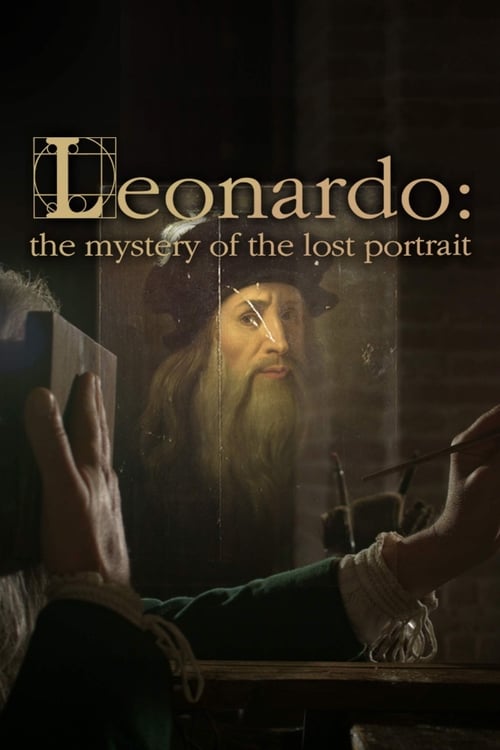
Leonardo: The Mystery of the Lost Portrait
2018
No user ratings available yet
Representation score: 3.1 out of 10

Representation Score
Minimal
2015
Director
Ian Leese
Runtime
59 minutes
Average Rating
No ratings yetNew Showbiz Analysis
Secrets of the Mona Lisa opens with a high-definition scan of the painting’s surface, zooming into the pigment to establish a forensic rather than emotional inquiry. The film’s argument is that technology can decode what the eye misses, positioning modern science as the superior lens for understanding Renaissance genius. Andrew Graham-Dixon guides the viewer through this process, but the camera’s true affection is reserved for the digital reconstructions, which glow with hyper-realistic clarity against the static, grainy footage of the presenters. The sold meaning is one of unbroken Western continuity: Leonardo's "genius" is validated by contemporary experts who share his phenotype and cultural framework, creating a closed loop of Eurocentric authority. The contradiction lies in the film’s treatment of the female subject. While the scientists "rescue" the painting from obscurity by revealing its hidden layers, the woman herself remains a hollow vessel for male projection. Her identity is debated as a puzzle to be solved, not a life to be understood. The female expert, Elisabetta Gnignera, is confined to the "soft" domain of costume history, while the male scientists and historians wield the "hard" tools of X-ray and infrared analysis. This gendered division of labor reinforces the traditional hierarchy: men interpret, women are interpreted. The ending returns to the physical painting in the Louvre, framed by its glass case and the surrounding crowd. This final image is the moral verdict: the Mona Lisa remains an unresolvable enigma, a global icon that is physically unchanged despite the digital "secrets" revealed. The film does not challenge the legend but adds a layer of scientific credibility to it, reinforcing the myth of the artwork as a timeless, transcendent object. The Louvre and the French state benefit from this fame, while the scientists’ speculative theories are never punished, only debated. The camera loves the object, not the people who made it or the woman who sat for it.
Category Breakdown
Absent. The documentary focuses on Renaissance art history and forensic science; no same-sex intimacy, queer characters, or non-binary identities appear on screen.
Limited. The film centers a male artist’s genius and a female subject’s passive mystery. Female experts like Elisabetta Gnignera discuss costume, while male scientists and historians hold the primary interpretive authority.
Absent. The cast consists entirely of white European presenters, scientists, and historians. The subject is identified as a Florentine merchant’s wife, reinforcing a strictly Eurocentric narrative without non-white perspectives.
Traditional. The film treats the Renaissance as a golden age of Western merit, with Leonardo da Vinci as the unchallenged genius. The Louvre and French state are presented as benevolent guardians of this high-cultural heritage.
Absent. No disabled characters, impairments, or neurodivergent perspectives are depicted. The "forensic" language applies to the painting’s physical layers, not human bodies or medical conditions.
Present on Screen
Limited or Absent
Official Synopsis
This landmark film uses new evidence to investigate the truth behind Mona Lisa's identity and where she lived. It decodes centuries-old documents and uses state-of-the-art technology that could unlock the long-hidden truths of history's most iconic work of art.
2018

2018
2016
2021

2001
2013

2019
2012
No reviews yet. Be the first to share your thoughts on this movie!
Use the rating form above to leave a star rating and optional review.