Launder Man
2017
No user ratings available yet
Representation score: 0.9 out of 10
Representation Score
Fair
2016
TV-MADirector
Emma Bell
Runtime
15 minutes
Average Rating
No ratings yetNew Showbiz Analysis
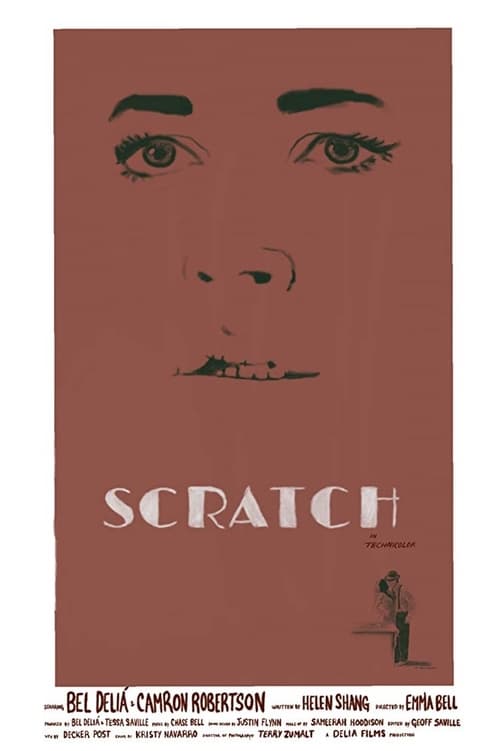
Scratch functions primarily as a psychological critique of 1950s domesticity. It succeeds in subverting gender roles by granting the female lead a significant role in the face of a domestic crisis, moving her beyond the cliché of the passive housewife. However, the film lacks multi-layered breadth. The setting appears culturally and racially homogeneous, adhering to a traditional Anglo-Saxon framework typical of period horror. While the themes of repression suggest a critique of social structures, the lack of explicit LGBTQ+ representation limits its inclusivity. Ultimately, the film is a focused study of gender and cultural instability rather than a broad exploration of diverse identities.
Category Breakdown
The film focuses on a single domestic unit in the 1950s. While repression hints at stifling social structures, there is no explicit depiction of LGBTQ+ identities.
The story challenges mid-century hierarchies by centering the female protagonist. She transitions from a repressed housewife to the primary investigator, while her husband is framed through his infidelity.
The setting appears to be a traditional, homogeneous 1950s environment. There is no evidence of a diverse or non-Anglo-Saxon majority cast within the narrative.
The film critiques the idealized mid-century American lifestyle and the sanctity of the nuclear family. It uses domestic horror to challenge social conformity and moral rigidity.
The narrative provides no information regarding characters with visible or invisible disabilities.
Present on Screen
Limited or Absent
Official Synopsis
When a repressed 1950s housewife is left alone by her philandering husband, she makes a horrifying discovery about the noises in the house that are coming from the walls.
2017
2011
2019
2021
2019
2019
2017

2017
No reviews yet. Be the first to share your thoughts on this movie!
Use the rating form above to leave a star rating and optional review.