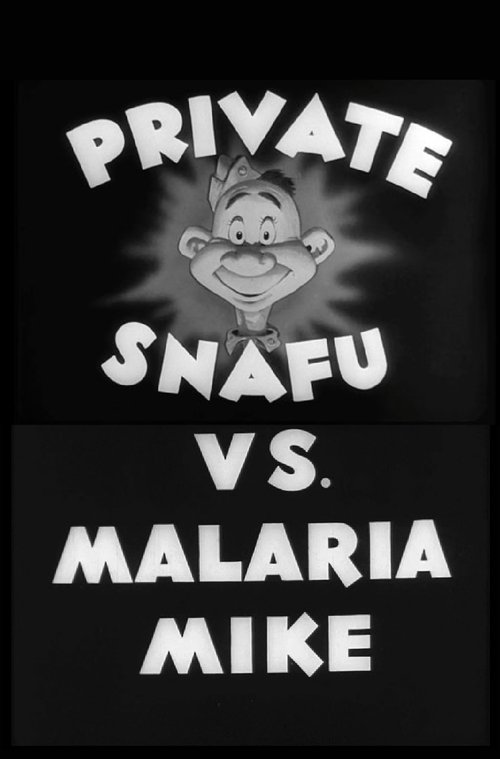
Private Snafu vs. Malaria Mike
1944
No user ratings available yet
Diversity score: 1.4 out of 10

1943
Director
Chuck Jones
Runtime
4 minutes
Average Rating
No ratings yetSynopsis
Pvt. Snafu complains about being assigned to the infantry only to learn that other branches have their own problems.
Overall Score
Limited
Category Breakdown
LGBTQ+ Representation
The film focuses on military hierarchy and branch-specific grievances. There is no evidence of non-cisnormative identities or narratives that critique heteronormativity.
Gender Representation
The narrative centers on the infantry, a domain depicted through a lens of hyper-masculinity. There is a notable lack of female agency or subversion of gender hierarchies.
Racial & Ethnic Diversity
The short aims to present a unified, homogeneous front. It depicts Western military institutions through a standard, non-intersectional lens typical of the era.
Religious & Cultural Diversity
The film functions as a tool for institutional reinforcement. It promotes patriotism and the importance of the collective over individualist or anti-establishment sentiment.
Disability Representation
Physical or mental struggles in this era of animation often served as comedic devices. There is no evidence of neurodivergent or disability-positive storytelling here.
Strengths
Areas for Improvement
AI Analysis
Produced in 1943, *The Infantry Blues* is a wartime propaganda short designed to reinforce national cohesion. The narrative architecture prioritizes institutional stability and military morale over the exploration of diverse social identities. The film relies on traditional hierarchies, focusing on the frustrations of male soldiers to validate the necessity of the military. This approach aligns with the mid-century studio system's emphasis on a unified, homogeneous national front. Ultimately, the work reflects the systemic constraints of its time, favoring patriotic themes and traditional social structures over intersectional representation or the deconstruction of established norms.
1944
1942
1944
1945

1943
1948
1945
1949
1942
1943
1951
1936
No reviews yet. Be the first to share your thoughts on this movie!
Use the rating form above to leave a star rating and optional review.